How the airport works isn't something you fully understand until you've been through it yourself. This guide will walk you through the entire process - from arriving at the airport to checking in and boarding your plane - so that your first flight doesn't catch you off guard and you can enjoy the journey instead of getting lost in the terminal.
Do you already know where you'll leave your car before your flight? Compare the latest car park offers near the airport, choose a space based on price, services or distance from the terminal, and book in advance so you have one less thing to think about.
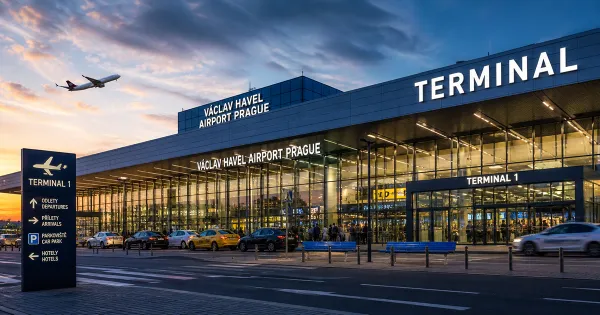
What Prague's Václav Havel Airport looks like
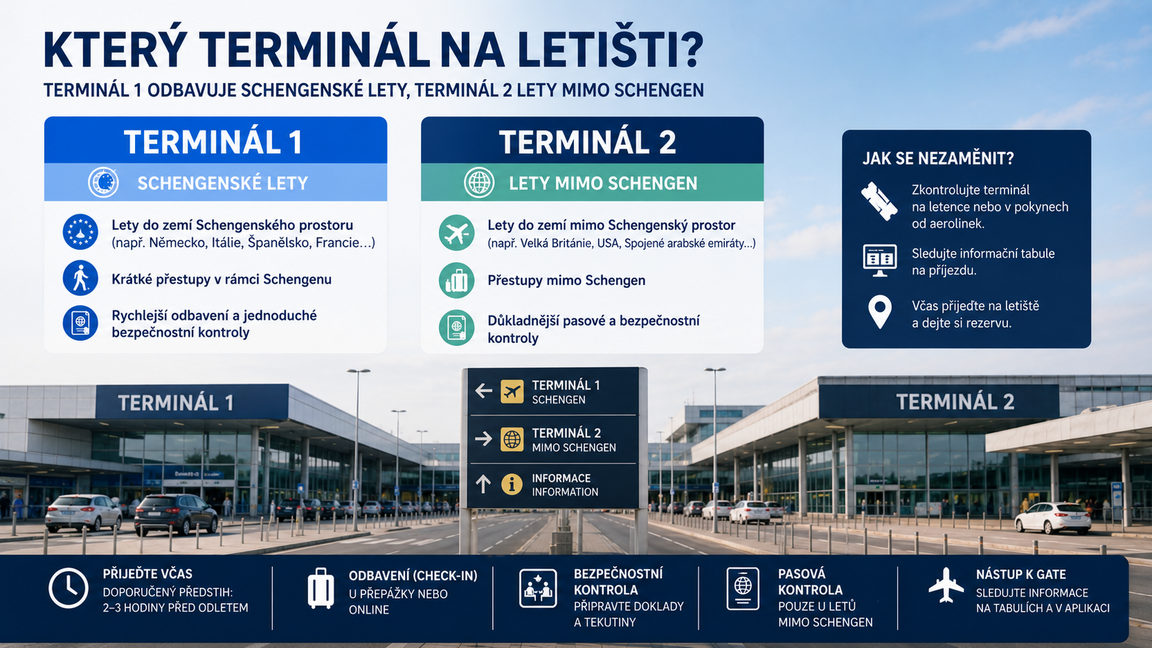
Let's get a feel for how the airport works using the closest example.
Terminals and halls
Václav Havel Airport in Prague has two main terminals. Terminal 1 handles the majority of flights within the Schengen area; Terminal 2 covers non-Schengen routes and some international connections. Always check your ticket or the carrier's website before you arrive so you know which terminal you're heading to.
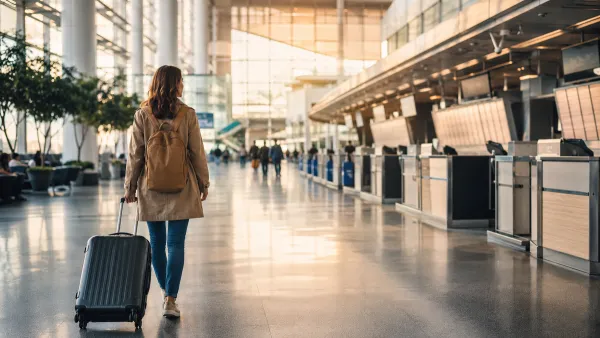
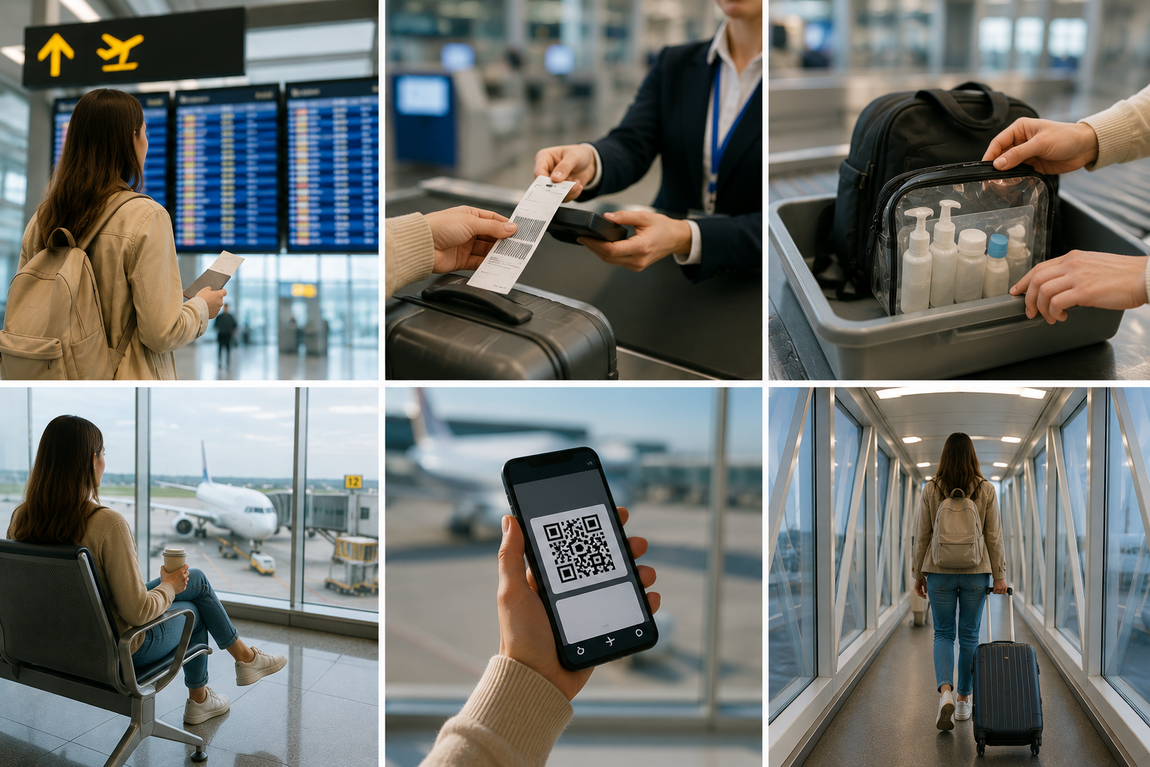
The departures hall is where check-in takes place; the arrivals hall is where you collect your luggage and exit the airport. These are physically separate parts of the building. Once you enter the departures hall, information boards showing departures and arrivals are positioned throughout - they display flight numbers, destinations, departure times and assigned check-in desks. Keep an eye on them as information updates in real time.
Duty-free zone
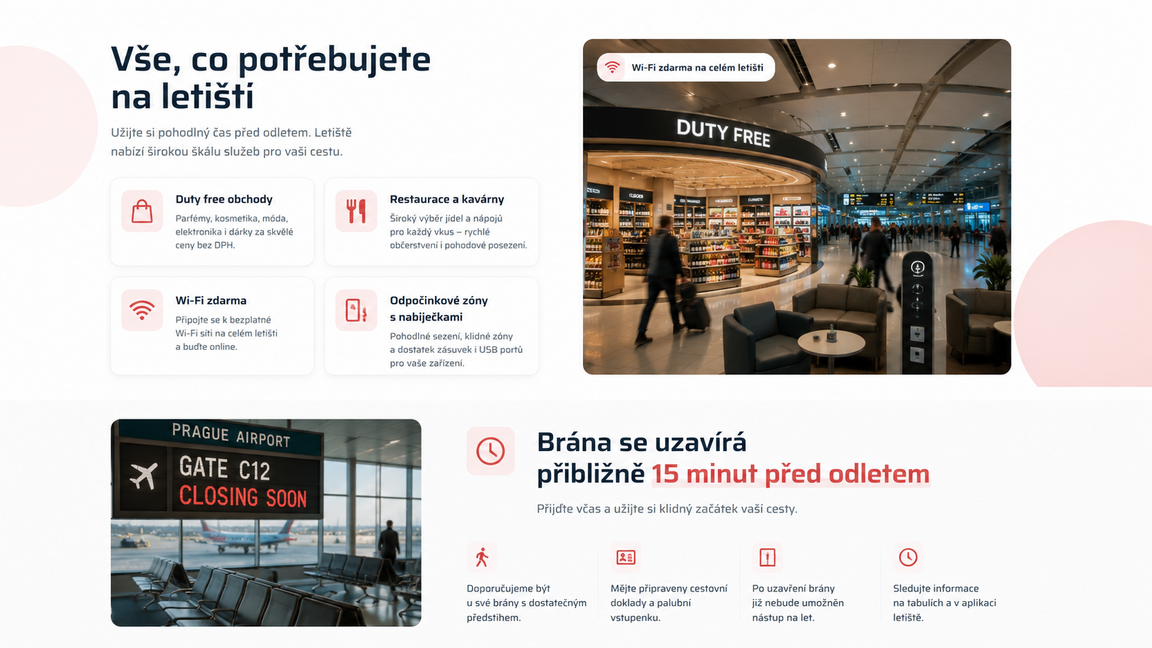
Beyond the security checkpoint lies the duty-free zone. You'll find shops selling alcohol, cosmetics, tobacco and electronics, as well as restaurants, cafés, rest areas and toilets. You only enter duty free once you've passed through security with a valid boarding pass.
Goods here are sold without VAT, so prices are often lower than in regular shops - though travel rules limit what you can take on board. Bottles of alcohol bought in duty free may only be carried in your cabin bag if they are sealed in a special security bag provided in the shop.
Arriving at the airport and parking
When to set off
The recommended arrival time before your flight depends on the length and destination. For Schengen flights, allow at least 2 hours; for destinations outside Europe and non-Schengen routes, arrive 3 hours ahead. In the summer season, add another 30 minutes for check-in and security queues.
Getting to the airport
There are several ways to reach the airport. Public transport is the cheapest option: from Veleslavín metro station, bus no. 119 runs directly to the terminals, and the Airport Express train also departs from Nádraží Veleslavín. Taxi, Bolt or Uber are fast and convenient, though prices can vary significantly in rush hour. Your own car gives you the most flexibility - especially for early-morning departures or late-night arrivals - but you'll need to sort out where to leave it, which brings us to the next point.
Parking near Prague Airport
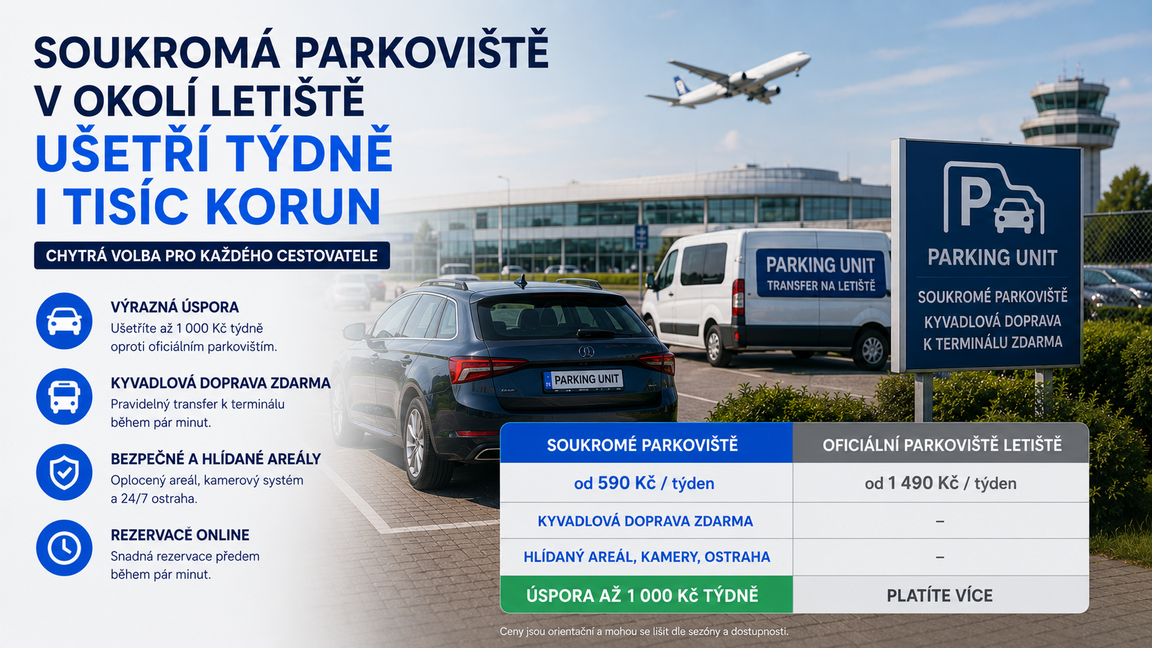
If you're driving, there are two main options. The official car parks inside the airport grounds are the most expensive: short-stay parking costs $4 an hour, and a week's stay runs into the thousands. Private guarded car parks near the airport offer the same level of security at significantly lower prices (see the benefits of airport parking), with a shuttle that takes you right to the terminal. The cheapest Prague Airport car parks start from $35 for a week's stay. The best-rated Prague Airport car parks according to traveller reviews combine reasonable prices with fast transfers and proven reliability.
Always book in advance. Popular car parks fill up completely in the summer season, and without a reservation you're searching for a free space with no guarantee of finding one.
Travelling with medication? Make sure you check the rules for medicines on a plane, especially if you have injections or liquids exceeding the standard 100 ml limit in your hand luggage.
Private guarded car parks can work out over a thousand crowns cheaper than the official airport lots for a week's holiday. Save money and book your space online today - you can cancel any time up to 24 hours before arrival.
How check-in and baggage drop work at the airport
Online check-in or at the counter
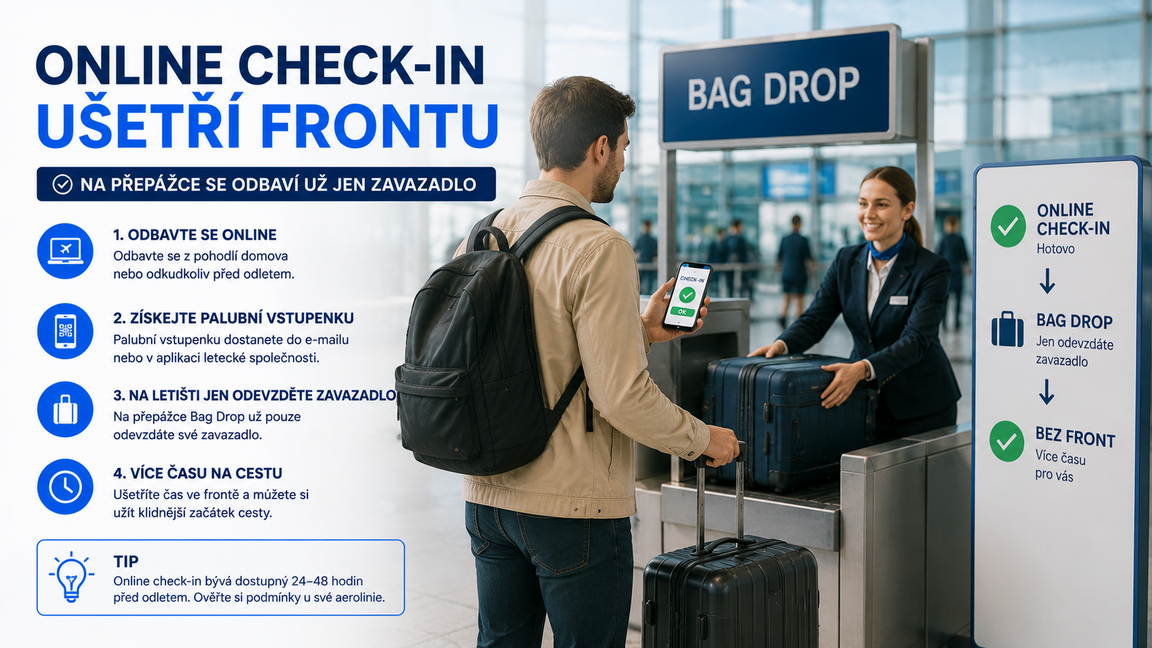
Check-in is your first mandatory stop after entering the departures hall. You have two options: online check-in through the carrier's website or app, which is usually available 24 to 48 hours before departure, or classic check-in at the airport counter.
Online check-in saves you the queue and lets you choose your seat in advance. You then just need the boarding pass on your phone or printed out. At the airport, head straight to the bag-drop counter rather than the check-in queue.
If you're checking in at the airport, go to your carrier's desk, present a valid ID and your ticket or booking reference. The agent verifies your booking, assigns or confirms your seat and issues your boarding pass. When your bag is checked, a barcode tag linking it to your flight is attached to your suitcase - check yourself that the tag is properly affixed and clearly readable.
Baggage allowances
Checked baggage limits vary by carrier and ticket type. Budget airlines typically allow 20 kg, while full-service carriers allow 23 to 32 kg. Excess baggage is significantly more expensive at the counter than if you pre-purchase extra weight online. For cabin baggage dimensions and weight limits, always check with your specific carrier.
Security screening
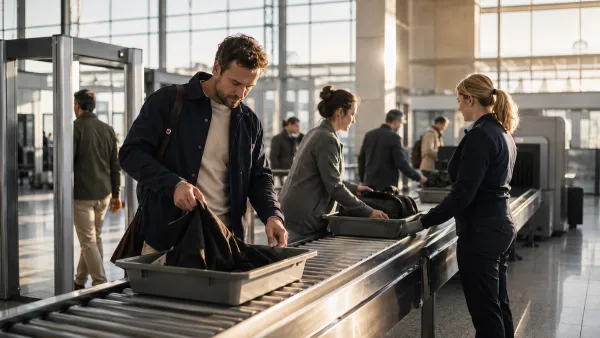
After dropping off your luggage, head to security. Take your laptop and larger electronics out of your bag and place them in a tray. Liquids must be in a clear bag, with each container no larger than 100 ml. Jacket, belt and shoes with metal elements go through the scanner or into a tray. Once through, reassemble everything and check the board for your departure gate number.
Passport control
For non-Schengen travel, passport control follows security. Have your passport ready; within the EU a national ID card is sufficient. Queues at passport control tend to be longest in the morning and afternoon - allow 10 to 20 minutes.
Waiting in the duty-free zone and tracking your gate
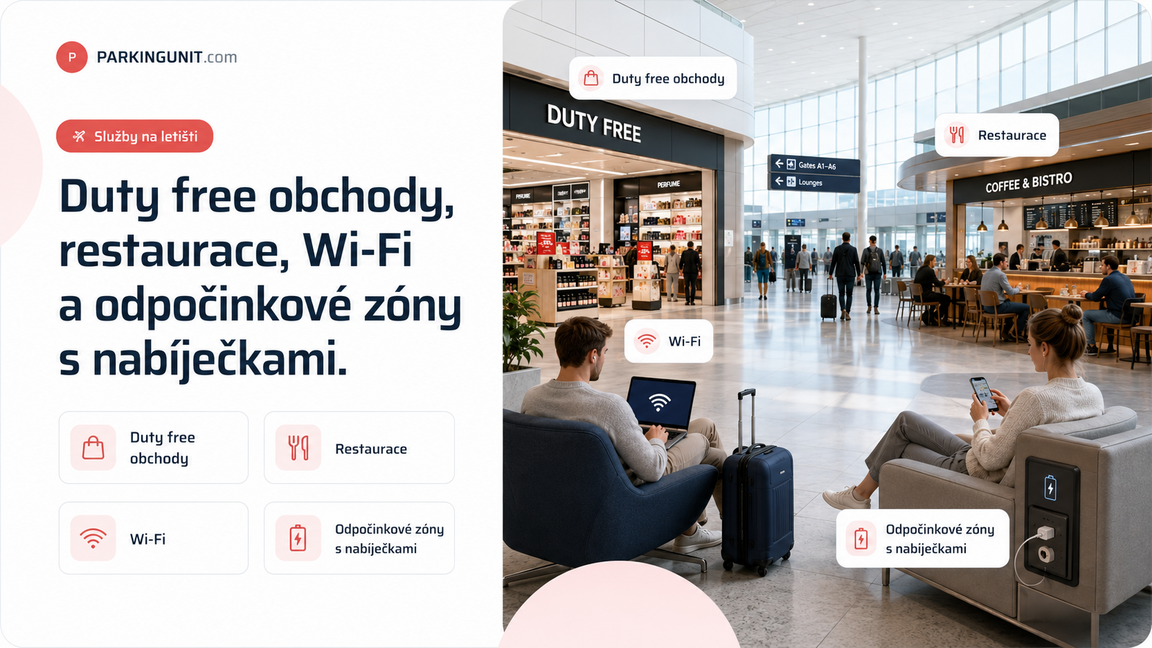
Once through the checkpoints you enter the duty-free zone, with shops, restaurants, Wi-Fi and rest areas with charging points. You cannot return to the public part of the airport from here without going through screening again.
Keep an eye on the departure boards - your gate can change even shortly before take-off. Set up notifications in your carrier's app. Boarding typically begins 45 minutes before departure; for gates at the far end of Prague Airport we recommend setting off with a bit of extra time to spare.
Sort out your airport parking from the comfort of home before you start worrying about which gate to head for. Verified guarded car parks near the terminal offer a fenced compound with cameras, a free shuttle and online booking in minutes. Compare the offers and choose yours!
Boarding: getting on the plane
Boarding happens in groups - passengers with children and those with reduced mobility board first, followed by priority and business class, and then everyone else. If you don't have priority boarding, there's no need to rush to the gate the moment the first call is made.
At the aircraft entrance, staff scan your boarding pass and check your ID - have it ready. You then either board directly via a jetway or travel out to the aircraft by bus if it's parked on the apron.
The gate closes approximately 15 minutes before departure. Anyone who doesn't make it won't be allowed to board, and their checked luggage has to be removed from the hold - causing a delay for the whole flight. Cutting it fine helps nobody.
During the flight
Once seated, read the safety card in the seat-back pocket or watch the safety video. Don't ignore the instructions - they're brief and they matter in an emergency. Fasten your seatbelt and keep it fastened even during a smooth flight.
Shorter flights of under 3 hours usually include no complimentary food; on budget carriers you pay for everything. For longer flights, catering varies by class - always check in advance what's included. Entertainment in the form of films, games or music is available on the in-seat screen or through the carrier's app on your phone.
Landing and leaving the airport
After landing, wait until the aircraft has come to a complete stop and the crew gives the signal to unfasten your seatbelt. Jumping into the aisle a minute early won't speed anything up. Once you've disembarked, follow the baggage claim signs.
At baggage claim, the boards show your flight number and the belt number where your bags will appear. Average waiting time is 15 to 30 minutes. If your bag hasn't shown up after 40 minutes, stay by the belt and report the problem at the lost and found desk before leaving the secure zone. You'll receive a claim reference number and information about delivery. Travel insurance generally covers costs related to delayed baggage. If your flight was cancelled or significantly delayed, find out the conditions for flight delay compensation, which you may be entitled to by law.
Beyond baggage claim you pass through customs. The green channel is for passengers who have nothing to declare and whose goods are within permitted limits. The red channel is for those who have something to declare. The choice of channel is mandatory, not optional.
After clearing customs you're in the arrivals hall. From there you continue by public transport, taxi, or to your parked car. If you're returning to a private car park with a shuttle, call the staff and the driver will meet you at the agreed spot.
Practical tips for first-time flyers
Watch the boards, set alarms for online check-in and your departure time, and travel with a time buffer. Keep your ID, boarding pass and health insurance card on you - and save everything to your phone as well.
The most common mistakes first-time travellers make are arriving at the airport too late, leaving a liquid in their hand luggage, and misreading the gate number (mixing up, say, B12 and D12). A hand bag that's packed too full - making it hard to pull out electronics at security - will also slow you down. Pack your bag at home so you don't have to scramble to unpack things at the checkpoint.
Now you know the essentials of how an airport works
The whole airport process only seems complicated the first time. You arrive, park or hop off public transport, find the check-in desk, drop off your luggage, pass through security and - if applicable - passport control, wait in the duty-free zone, and board at the gate. On arrival, you collect your luggage, pass through customs and head home.
The key to a stress-free flight is being prepared. Check your documents and look up your cabin baggage dimensions the day before. Plan your transport to the airport and sort out parking well in advance. Browse car parks near Prague Airport and book a space before you leave home.
Start your holiday with a calm, timely parking booking - not by hunting for a free space at the last minute. Compare private guarded car parks near the airport and secure your spot today.