Airport parking is one of those things you can sort out in advance and then stop thinking about. Compare the guarded car parks available at any airport by price and distance, and reserve your spot ahead of time. You can cancel anytime up to one day before arrival.
Pre-Flight Nerves and How to Handle Them
Fear, nervousness, and "what if" thoughts the night before departure are completely normal. Statistically, though, the plane is the safest mode of transport in the world, and the vast majority of first flights pass without any incident at all.
If you feel tense, simple calming techniques help: slow deep breathing (inhale for 4 seconds, hold for 4, exhale for 4), a favorite podcast or playlist ready for the flight, or simply a good book. The nerves usually fade noticeably the moment you're holding your boarding pass and see other passengers all around you in exactly the same situation.
Time is your biggest ally. Travelers who arrive at the airport early and don't rush handle their first flight far more calmly than those sprinting to the gate in the final minutes. Plan to arrive at least 2 hours before departure for Schengen flights, and 3 hours for non-Schengen flights and destinations outside Europe.
How to Prepare for Your First Flight
Documents and Visas
Within the Schengen area, a valid national ID card is enough. For flights outside the EU, you need a passport valid for at least six months beyond your planned return date, otherwise the airline may refuse to let you board. You won't need your passport number until check-in — when buying the ticket, your name and date of birth are enough.
Check visa requirements in advance on the Ministry of Foreign Affairs website. The Czech passport is relatively strong and gets you into many countries visa-free; for longer stays or specific destinations (India, Vietnam, Egypt, USA), you'll need an electronic visa or a standard visa from the embassy. Whatever you do, don't leave this until the last minute.
Choosing Your Seat
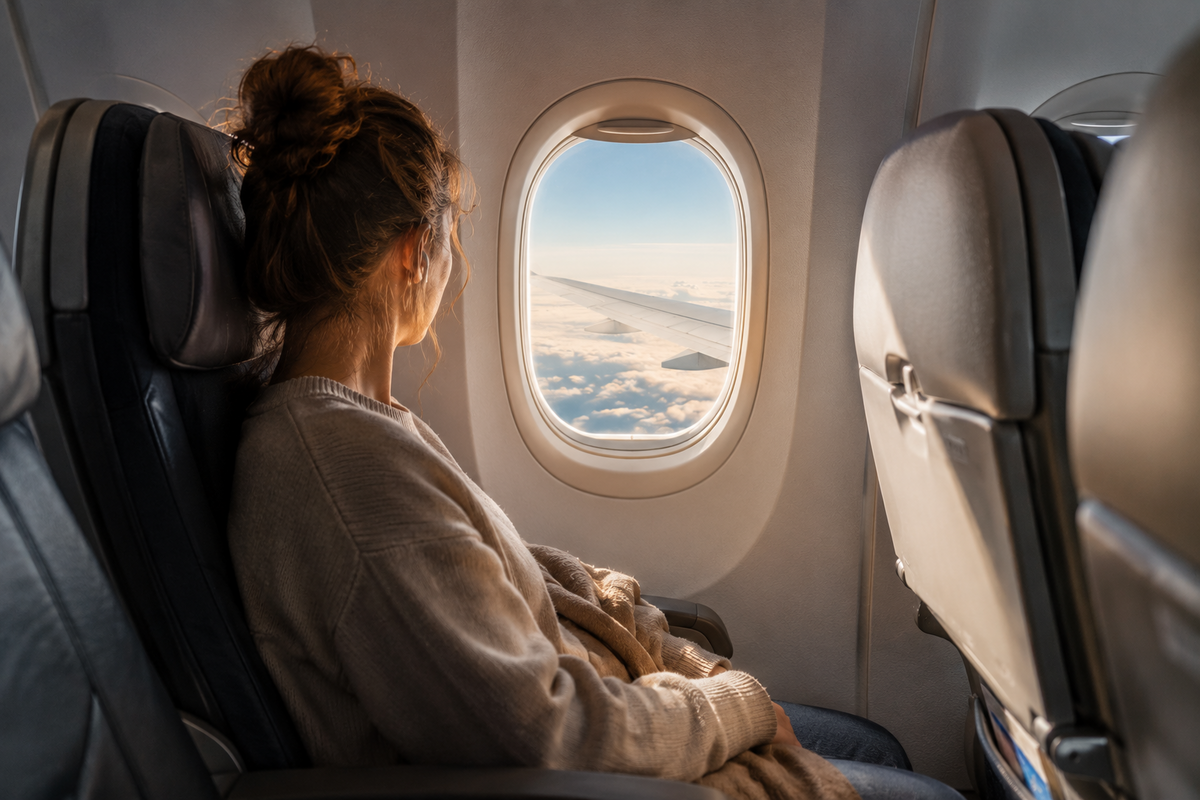
Ideally, reserve your seat when buying your ticket or during online check-in. A window seat offers a view and something to lean on when sleeping, while an aisle seat is practical for frequent trips to the toilet and stretching your legs on longer flights. The front rows tend to be quieter in terms of noise and vibration. Seats by the emergency exits have extra legroom, but children and passengers with limited mobility aren't allowed to sit there.
Luggage and Packing
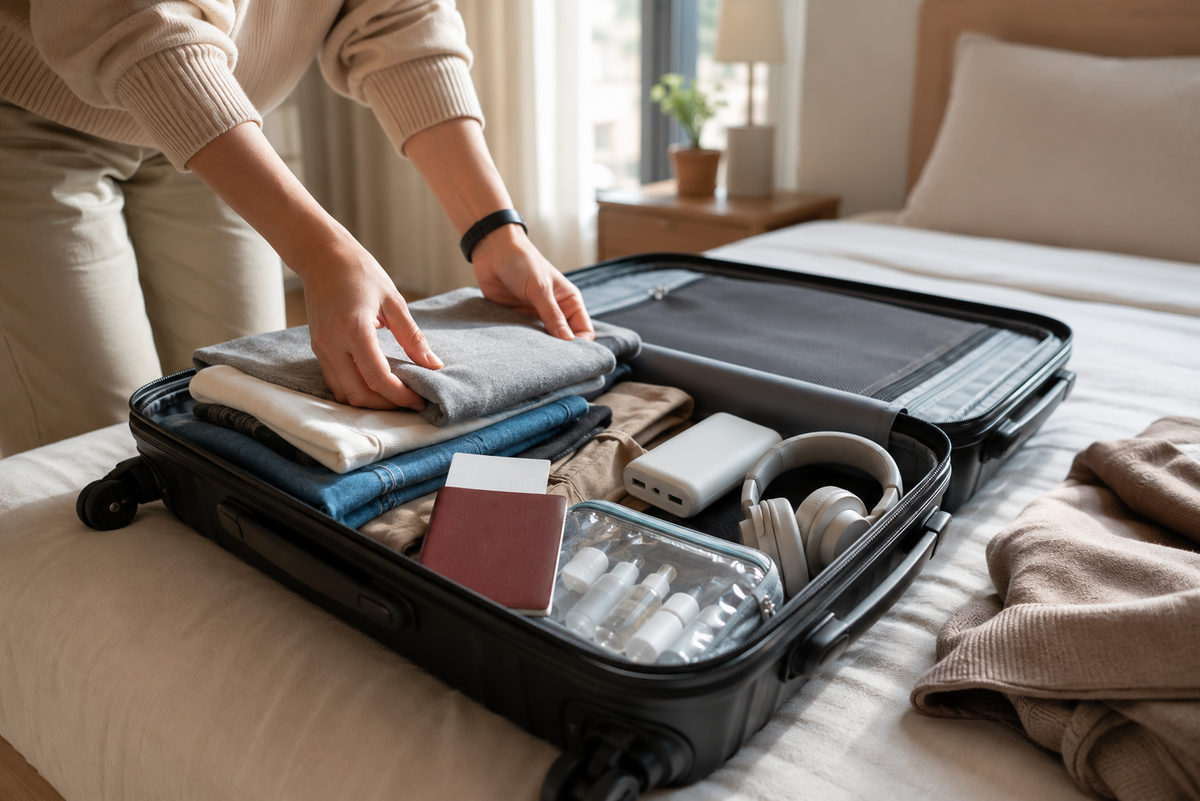
You'll find the detailed rules for cabin bags in our overview of carry-on baggage dimensions. Your carry-on should always hold your documents, valuables, electronics, medication, and anything you'll need during the flight. Clothing, larger cosmetics, and holiday gear go in your checked suitcase.
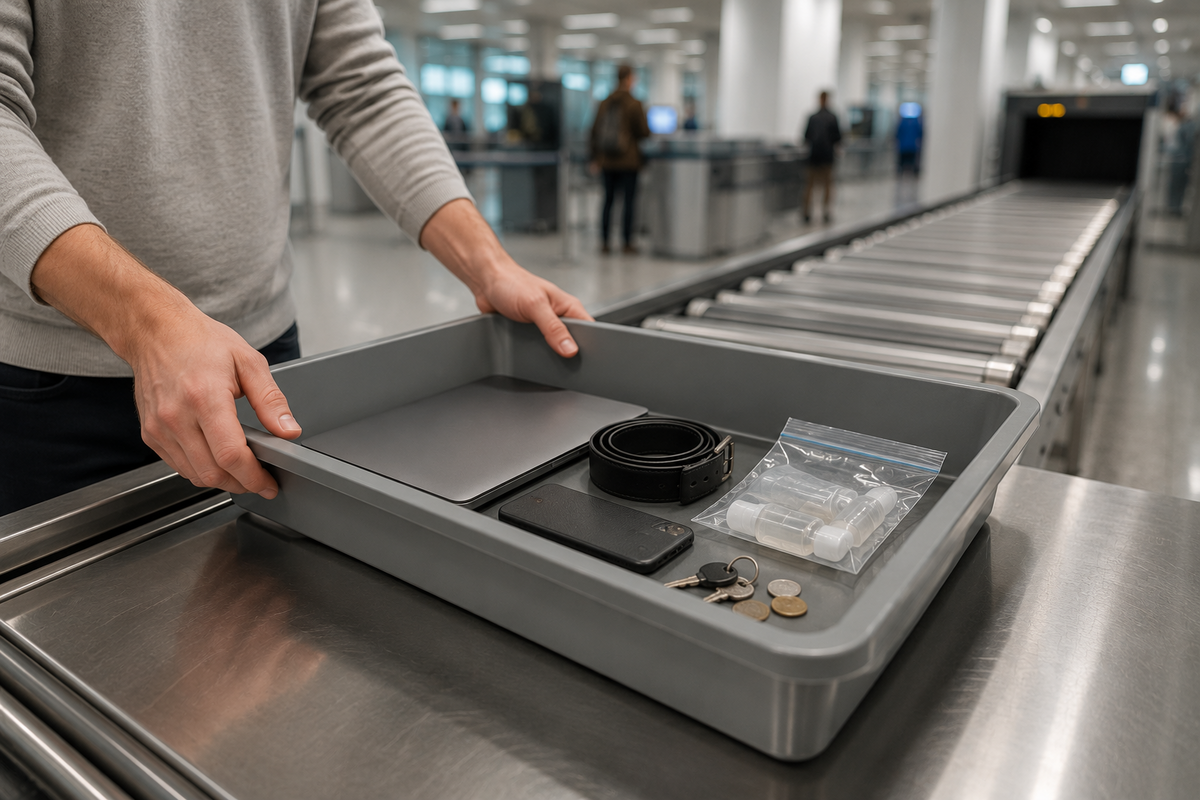
Pack liquids for your flight in a clear resealable bag with a capacity of 1 liter; no single container may exceed 100 ml. Put the bag at the top of your carry-on so you can pull it out easily at security.
What to Wear
Dress comfortably and in layers. The cabin tends to be warm on the ground and cooler in the air. Avoid clothing with metal elements — buckles, heavy jewelry, belts with metal clasps — because you'll have to take it all off at security. The ideal outfit for flying is made of breathable fabrics, paired with comfortable shoes that slip off quickly.
Reserve your airport parking well in advance. You arrive relaxed, leave your car in a fenced lot with camera surveillance, hop on the shuttle, and reach the terminal in minutes. You pay on-site, and cancellation is free up to 24 hours ahead.
Check-in and Security Screening at the Airport
Check-in and Baggage Drop-off
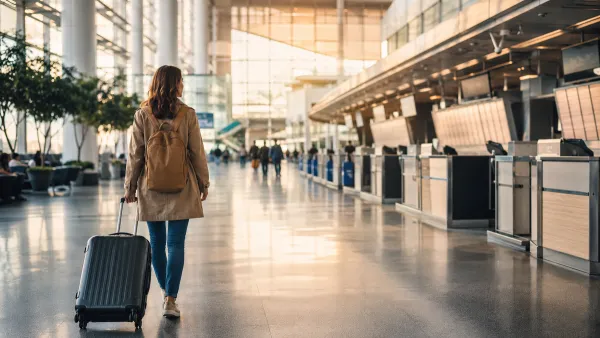
When you arrive at the airport, look for the large board marked Departures — it shows the counter numbers for your flight. If you've checked in online, head straight to the baggage drop-off counter and skip the queue. If not, go to your airline's counter, show your passport or ID and your ticket, and the agent will issue your boarding pass and tag your suitcase.
From this moment on, your boarding pass — together with your ID — is your most important document. Keep it handy at all times.
Security Screening Step by Step
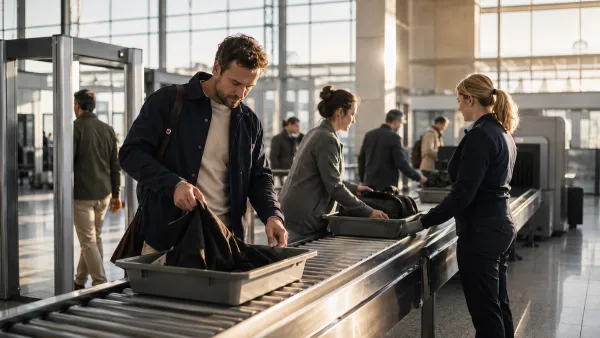
Before you join the security queue, take your laptop, tablet, and liquids bag out of your carry-on and place them in a bin. Take off your jacket, belt, watch, and metal jewelry. Shoes with metal parts or thicker soles come off too. You walk through the scanner while your belongings go through the X-ray. Once you're through, collect everything and check the board for your gate.
Security screening is a routine procedure. The staff are used to first-time travelers and will help if you're unsure what to do. For a full walkthrough of what awaits you, see our guide to how things work at the airport.
Finding Your Gate and Keeping an Eye on the Time
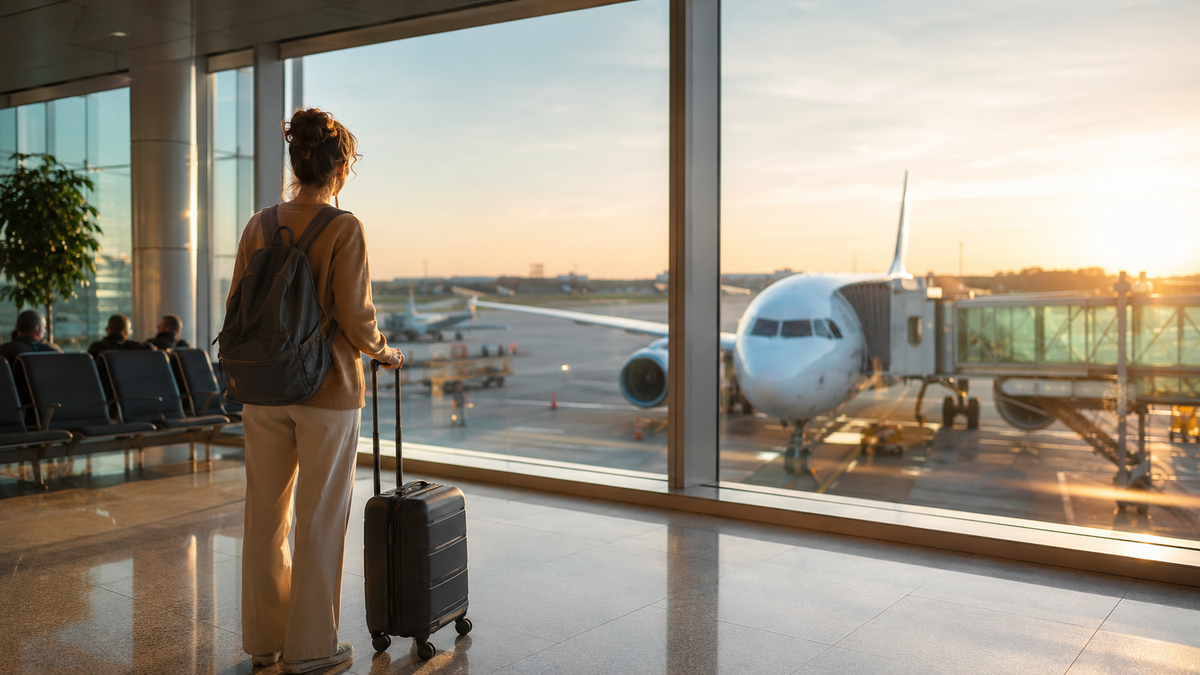
Your gate is printed on your boarding pass, but it can change, so keep checking the information boards. At Prague Airport, for example, the distances between gates are manageable — even so, don't leave the walk to your gate until the last moment. Boarding usually opens about 45 minutes before departure and closes 15 minutes before it.
What to Expect Onboard and After Landing
Boarding and Finding Your Seat
Boarding happens in groups. Families with children and business class go first, followed by the other passengers by zone or row. At the aircraft door, the crew checks your boarding pass and points you in the right direction. Seat 3A is in the third row by the window; 3C is on the aisle.
Stow your carry-on in the overhead bin or under the seat in front of you. Rows by the emergency exits must stay clear — don't put bags on the floor there.
Takeoff and the Flight
Before takeoff, listen to the crew's safety briefing, fasten your seatbelt, and switch your phone to airplane mode. Takeoff is the moment many first-time flyers describe as the most intense part of the whole flight — the sensation of acceleration and climbing is stronger than anything else. It lasts about two minutes; then the aircraft reaches cruising altitude and everything calms down.
Ear pressure during takeoff and landing is normal — it's caused by pressure equalizing in the middle ear. Swallowing, chewing, or the Valsalva maneuver helps: pinch your nose, close your mouth, and gently blow. For children, breastfeeding or sucking on candy works well.
It can get chilly onboard, so pack a light hoodie or scarf. Entertainment depends on the airline: some offer seatback screens with movies and music, others (especially low-cost carriers) don't. Headphones and content downloaded to your phone are a good backup.
Landing and Baggage Claim
After landing, wait until the aircraft comes to a complete stop and the crew gives the signal to unfasten seatbelts. Passengers exit from the front rows first. Follow the signs for baggage claim. A board in the arrivals hall shows the carousel number for your flight. The average wait is 15 to 30 minutes.
If you're flying outside the Schengen area, passport control comes before baggage claim. After collecting your luggage, you'll pass through customs — the green channel if you have nothing to declare, the red one if you do.
Your First Flight - Questions and Answers
What if I'm afraid of flying?
Fear of flying varies in intensity and has different causes. Mild nervousness usually goes away on its own after your first flight. For stronger fear, it helps to read up on aviation safety facts, talk to the crew, or take a course designed for people with a fear of flying (airlines themselves run these).
Can I bring both a backpack and a suitcase?
It depends on the airline and fare. With low-cost carriers (Ryanair, Wizz Air), only a small backpack that fits under the seat is included in the base price; a larger cabin bag or checked suitcase costs extra. With traditional carriers (Lufthansa, CSA), both carry-on and checked luggage are usually included.
What if I miss my flight?
Contact your airline's counter at the airport immediately. If it's a direct flight within a single booking, the airline will rebook you on the next available connection. If you have separate tickets from different carriers and the missed flight is the first of them, you're not entitled to a replacement. That's why first-time travelers should choose direct flights or connections within a single booking.
How do I know whether to go to Terminal 1 or 2 at Prague Airport?
Terminal 1 handles flights outside the Schengen area (the UK, Turkey, Egypt, and so on). Terminal 2 handles Schengen flights (Germany, Spain, Italy, and so on). The correct terminal is always shown on your ticket or in your airline's app.
Now You Know How to Handle Your First Flight Stress-Free
Anyone can manage a first flight, and knowing what's coming makes it that much easier. The essentials: documents checked, luggage packed, comfortable clothes on, and the liquids bag at the top of your carry-on. At security you take everything out, at the gate you show your boarding pass, and the rest falls into place.
Just as important is having your airport parking sorted. We recommend reading our article on the benefits of airport parking. With our booking system, you can easily reserve parking at airports worldwide and skip the stress of hunting for a spot at the last minute.
And if you want to save money, check the available promo codes for Prague Airport parking – some car parks offer seasonal discounts or loyalty perks.
A first flight brings plenty of things you're dealing with for the first time and may not know your way around. Parking doesn't have to be one of them. Use our comparison tool to pick guarded parking with a shuttle to the terminal in just a few minutes, and on departure day focus on what really matters.