To arrive at the airport relaxed and with plenty of time, do not forget to sort out parking as well. Compare car parks in the immediate area, book easily online, and pay on arrival.
How to choose the right suitcase or bag for a flight
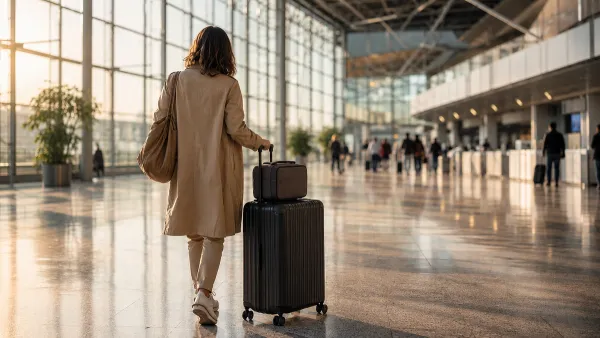
Choosing luggage does not start in an online shop - it starts on the airline's website. A case that fits perfectly with Lufthansa may not pass through Ryanair's sizing frame.
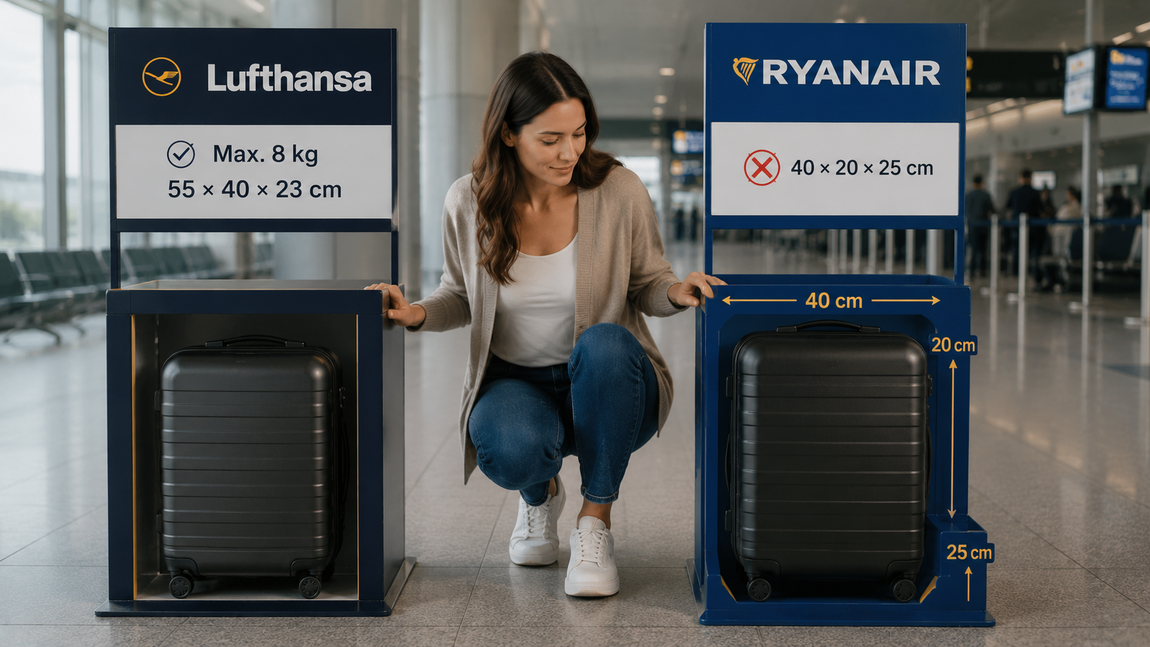
Every airline sets its own rules for dimensions and weight, and the limits can also vary depending on your fare type. Budget carriers include only a small under-seat bag in the base fare, while traditional carriers typically allow a larger cabin bag as standard.
The length and nature of the trip also matters. A weekend in Barcelona is manageable with a 30-40-litre backpack; a two-week family holiday is a different story. A soft-sided bag can be compressed, while a hard-shell case offers better protection for electronics.
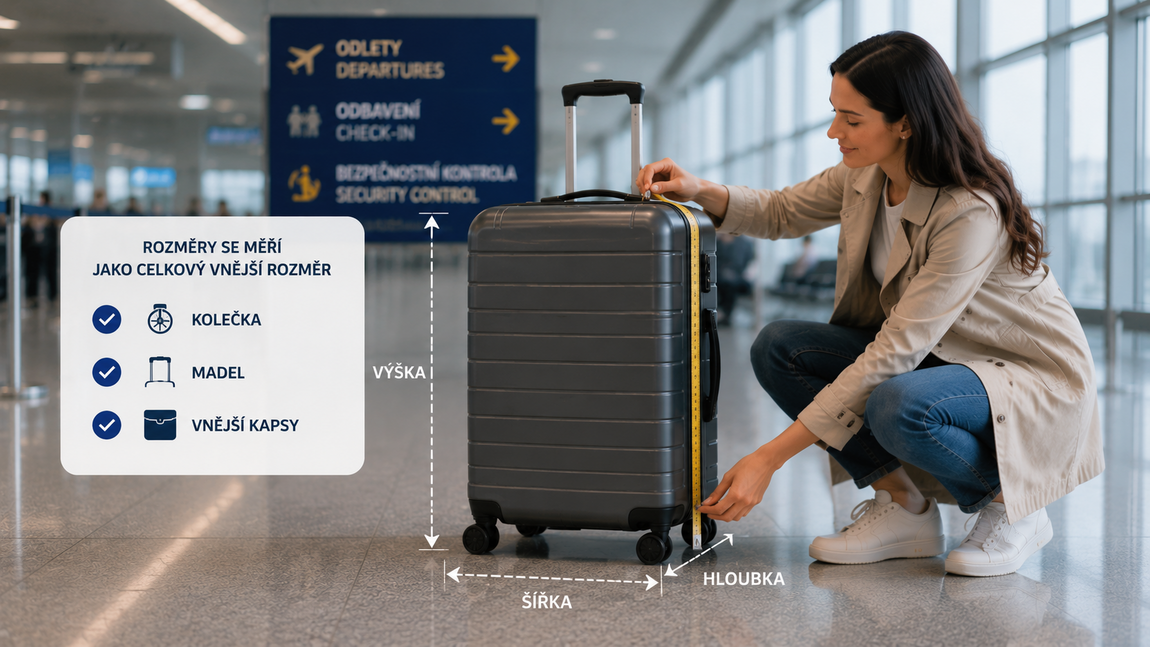
- When choosing, also consider the weight of the empty case or bag itself. A hard-shell spinner can weigh 3-4 kg, leaving considerably less of a seven-kilogram limit for your actual belongings. Wheels and a telescopic handle add 3-5 cm to the overall height, and airport sizing frames measure the total external dimensions including these elements.
- A TSA lock is useful when travelling overseas, where security services routinely open hold luggage. An expandable case is practical, but bear in mind that when fully expanded you can easily exceed the permitted dimensions.
- From the perspective of how the airport works - gate staff in 2026 are authorised to use automatic sizing frames and can demand an immediate surcharge if your bag does not fit. Checks are becoming stricter, and they now take place at airports where nobody used to measure anything.
- The best strategy is to buy a bag whose dimensions comply with the strictest airline you fly with. That way you automatically meet every other carrier's requirements.
- For first-time flyers, it is also worth reading the guide on how early to arrive at the airport - getting your timing right is just as important as packing the right bag.
Got your bag sorted and now wondering what to do with the car while you are away? Private monitored car parks near the airport can be thousands cheaper for a week's holiday than the official airport car parks. Book in advance, pay on arrival, and cancel up to 24 hours before you show up.
What dimensions and weight should a carry-on bag be?
IATA recommends a standard cabin bag size of 55 × 35 × 20 cm, but as mentioned, individual airlines deviate from this recommendation. The most common dimensions are 55 × 40 × 20 cm with a weight limit of 7-10 kg.
Dimensions are always measured as total external size including wheels, handles and external pockets. With budget carriers, the bag must fit entirely inside the sizing frame.
Carry-on bag and personal item
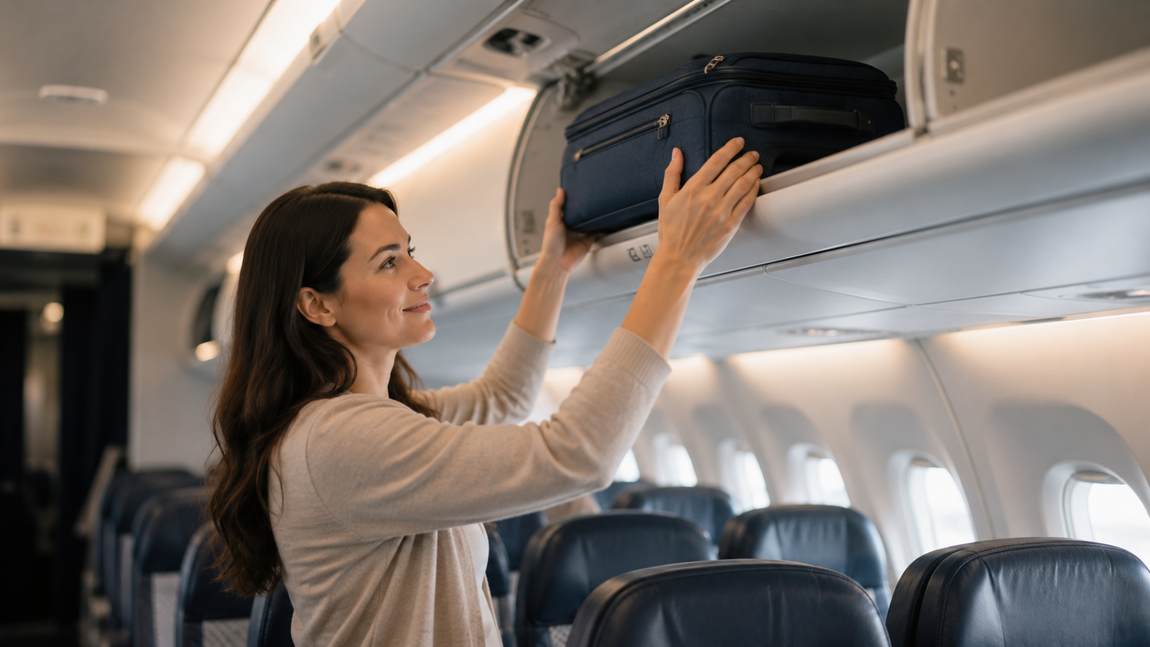
Most airlines distinguish between two categories of cabin luggage. The larger carry-on bag is stored in the overhead locker and is only included in the base fare with traditional carriers. The personal item is a smaller bag, backpack or handbag that fits under the seat in front of you. With Ryanair and Wizz Air, only this smaller category is included in the base fare.
If you have purchased a priority boarding or higher fare, you will generally be entitled to both categories: a larger overhead cabin bag and a personal item under the seat.
Carry-on luggage size limits by airline in 2026
| Airline | Free (small item) | Extra charge (larger bag) | Weight |
|---|---|---|---|
| Ryanair | 40 × 20 × 25 cm | 55 × 40 × 20 cm (Priority) | up to 10 kg (larger bag) |
| Wizz Air | 40 × 30 × 20 cm | 55 × 40 × 23 cm (Priority) | up to 10 kg |
| easyJet | 45 × 36 × 20 cm | 56 × 45 × 25 cm (extra charge) | up to 15 kg |
| Smartwings | 55 × 40 × 23 cm (Lite) | personal item 40 × 30 × 15 cm (Plus/Flex) | up to 8 kg |
| Lufthansa | 55 × 40 × 23 cm | personal item included in fare | up to 8 kg |
| ČSA / Czech Airlines | 55 × 45 × 25 cm | depending on fare | up to 8 kg |
Data is valid for 2026. Rules can change - always verify the current conditions on the airline's website before purchasing your ticket.
- Ryanair is the strictest of the budget carriers. The base fare includes only a small bag of 40 × 20 × 25 cm. A larger cabin bag of 55 × 40 × 20 cm (up to 10 kg) is only permitted for passengers with Priority boarding. The fee for adding a carry-on bag at the gate ranges from 35 to 69.99 EUR.
- Wizz Air allows a free backpack of 40 × 30 × 20 cm. A larger bag of 55 × 40 × 23 cm is available with Wizz Priority for an extra 25 EUR when added in advance, or 60 EUR at the gate.
- easyJet offers a more generous standard allowance - the base fare includes a bag of 45 × 36 × 20 cm up to 15 kg, with a larger case of 56 × 45 × 25 cm available for an extra 24 GBP, or 48 GBP if added at the gate.
- Smartwings is one of the more passenger-friendly carriers: even in the cheapest Lite bundle you get a cabin bag of 55 × 40 × 23 cm up to 8 kg. In the higher Plus and Flex bundles, a small personal bag of 40 × 30 × 15 cm up to 3 kg is also included free of charge.
- Lufthansa standardly allows one cabin bag of 55 × 40 × 23 cm up to 8 kg plus a personal item under most fares.
Notes on the differences
Priority boarding is key with budget carriers not just for getting on the plane first, but specifically for the right to bring a larger carry-on bag. Without it you risk having your bag taken at the gate and put in the hold for an extra fee. Rules can also vary by destination within the same airline, so always check the rules for the specific flight you are booking.
What may be in carry-on luggage
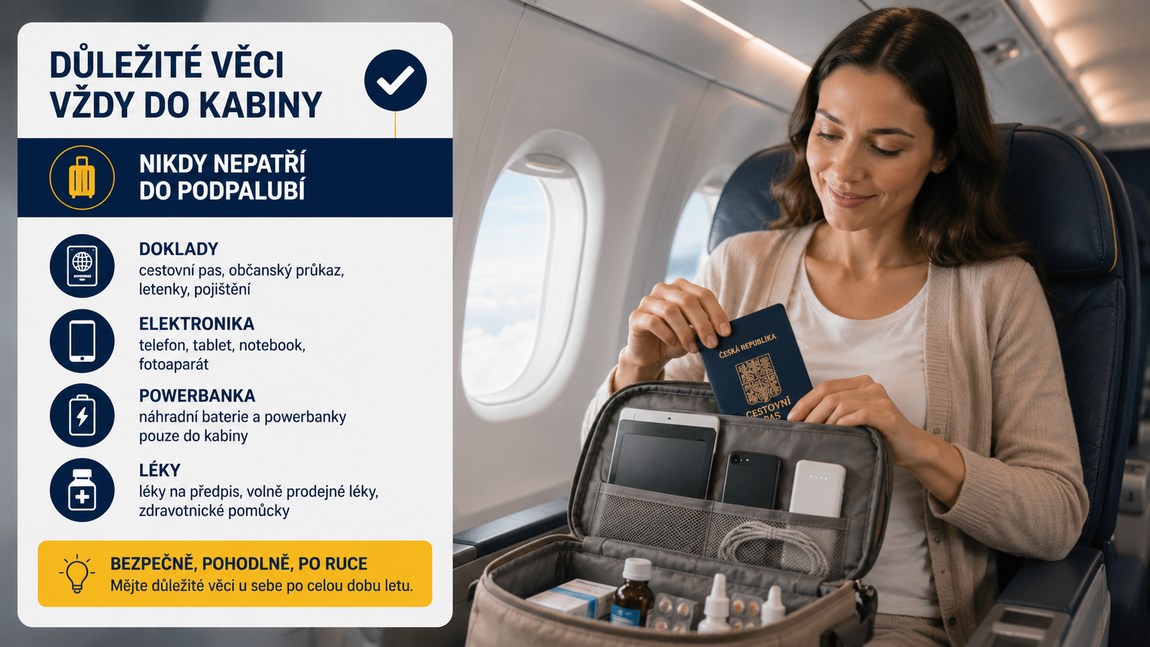
The cabin is for items you need access to during the flight or that are too valuable to travel in the hold.
Identity documents, your passport, tickets and boarding pass should always be in your carry-on, never in your checked bag. The same applies to cash, payment cards and jewellery. Electronics - a laptop, tablet, phone and power bank - must be carried in the cabin without exception. Lithium-ion batteries are prohibited in the hold due to the risk of fire.
Medications and medical supplies do not belong in checked luggage, especially if you need them regularly. Injections and insulin pens pass through security with medical documentation. For airport check-in with liquid medicines over 100 ml, a prescription or doctor's note must be presented.
We always recommend packing a change of clothes, spare underwear, and basic toiletries in your carry-on. If your checked bag is lost or delayed, you will be very glad you have the essentials with you.
Liquids in carry-on luggage
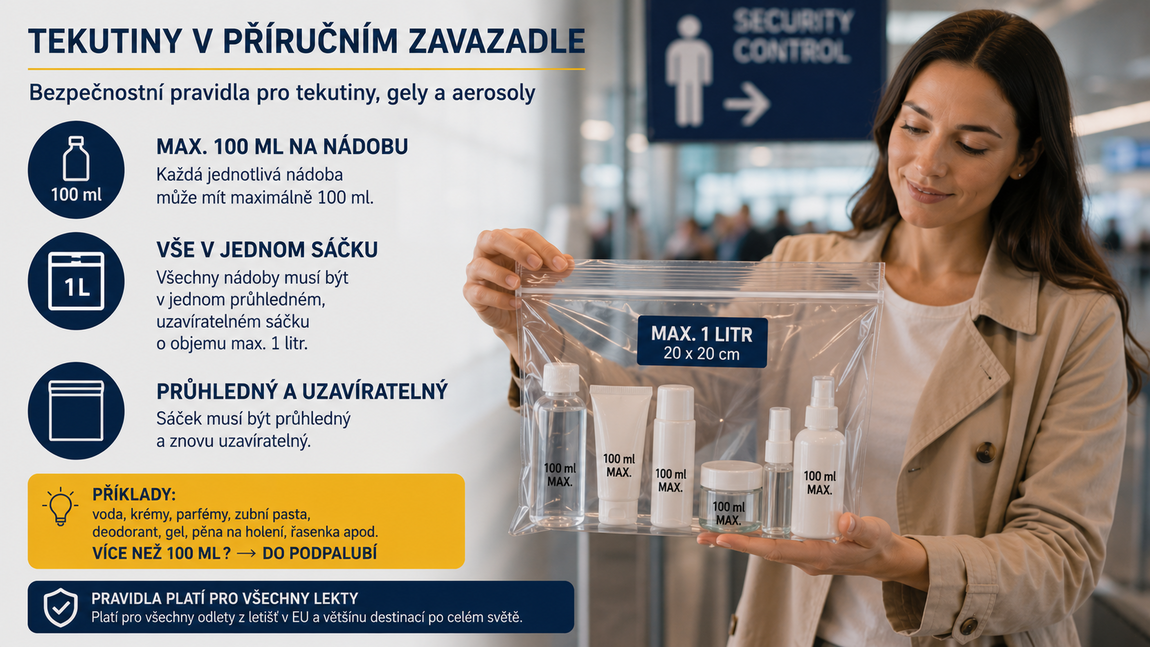
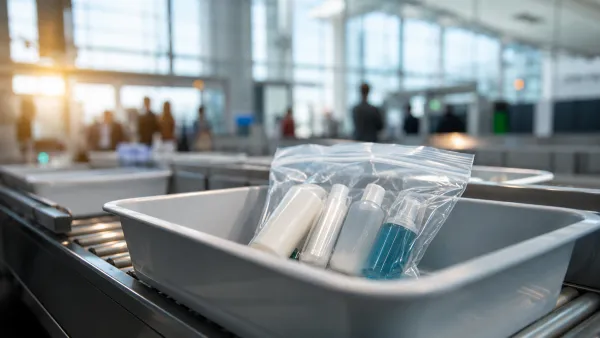
Each container of liquid in carry-on luggage must hold a maximum of 100 ml, and all containers must be placed in a single clear resealable bag with a maximum capacity of 1 litre. Take the bag out of your hand luggage before security screening and place it separately in the tray.
A surprisingly wide range of things count as liquids: cream, toothpaste, shampoo, shower gel, perfume, spray deodorant, pâté or soft cheese. Solid deodorant, bar soap and solid shampoo are not subject to the limit.
Exceptions exist for prescription medicines, baby food and infant formula. These liquids may be carried in the cabin in the quantity needed.
Some European airports are gradually switching to next-generation CT scanners that do not require liquids to be placed in a bag. At Prague Václav Havel Airport this is not yet fully in place, so always prepare your liquids bag.
What you cannot bring into the cabin
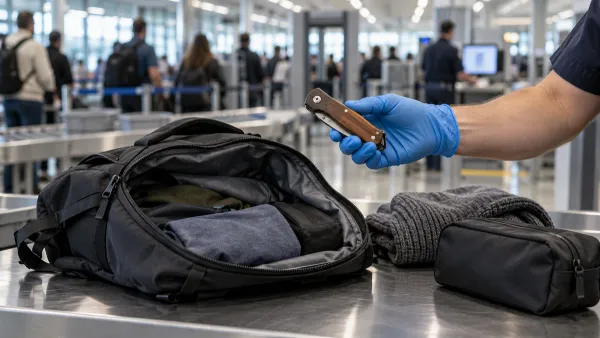
Sharp objects - scissors with a blade longer than 6 cm, knives, uncovered razor blades or carving tools are prohibited. Razors and scissors with a shorter blade are generally allowed.
Flammable substances and pressurised containers do not belong in the cabin. Hairspray over 100 ml, a lighter with a spare cartridge or aerosol lacquers must go in your checked bag or be left at home.
Weapons and their imitations, replicas and props are prohibited both in the cabin and as carry-on items in checked luggage. Sports equipment (ski boots, hockey sticks, diving cylinders) must go as checked baggage only.
A power bank, on the other hand, must always be in the cabin. It is not permitted in the hold even if you wanted to put it there.
The most common carry-on luggage mistakes
The most frequent way people lose money is through oversized luggage caused by bulging side pockets or a case packed to bursting. A bag with dimensions of 55 × 40 × 20 cm meets the limit when empty, but once packed with its side pockets full, it can measure 58 × 43 × 22 cm.
Liquids without a clear resealable bag, or in containers over 100 ml, are the second most common cause of delays at the security checkpoint. The officer will not let you through and your liquids will end up in the bin.
The third mistake is not checking what your specific fare actually allows. Anyone who buys the cheapest Ryanair ticket and assumes they are entitled to a 55 × 40 × 20 cm bag without Priority boarding can easily face a charge of 50-70 EUR at the gate.
Practical packing tips for carry-on luggage
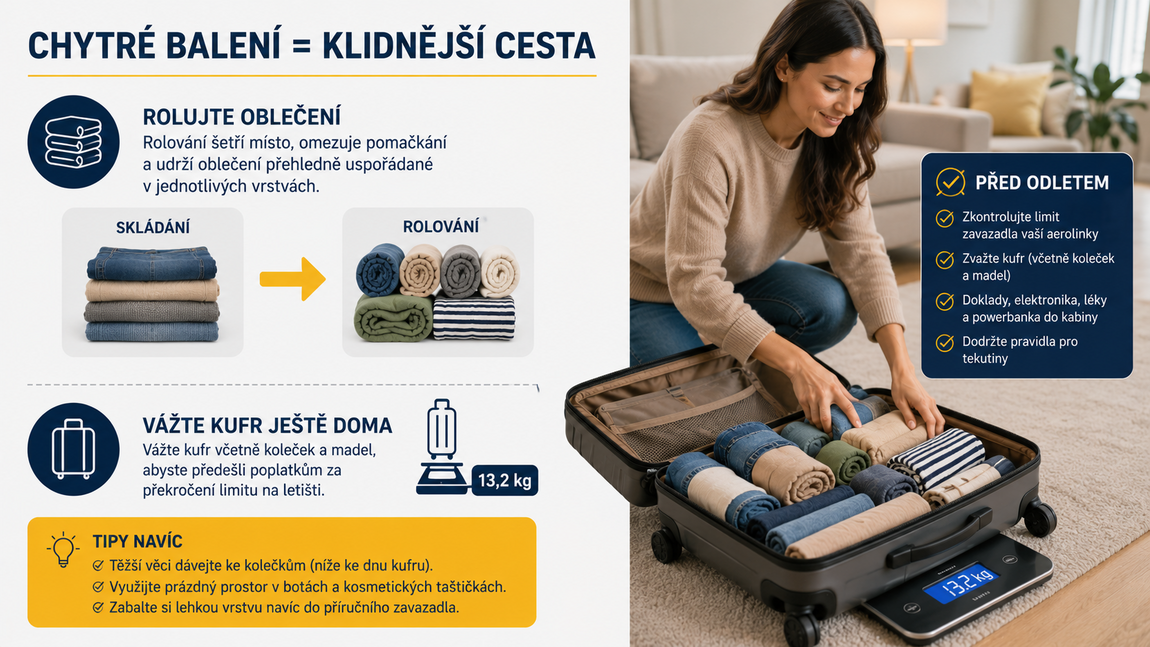
Less is more. Unpack your bag, put half of your things back in the wardrobe, and take only what you cannot do without. For a short weekend trip, one change of clothes, toiletries in 100 ml containers, and your electronics are enough.
Fold clothes in layers or roll them - do not fold them flat. You will save space and clothes will crease less. Vacuum packing bags compress clothing volume by 20-30 % and keep your bag organised.
Items you will need during the flight or right after landing should go on top or in an easily accessible outer pocket. Documents, your phone, headphones and medications must be reachable without turning the whole bag upside down.
Always weigh and measure your bag before you travel, including the wheels. A digital luggage scale costs next to nothing and saves stress and money at the check-in desk.
Now that you know your carry-on size limits, it is time to sort out parking
Carry-on checked, documents ready? The last thing to take care of is where your car will safely wait out the whole holiday. Verified monitored car parks near the airport offer a fenced site with 24/7 CCTV and a shuttle directly to the terminal. Browse the full selection on the long-stay Prague Airport parking page, where you can filter by price, distance and passenger ratings. How the reservation process works step by step is explained on the how parking reservation works page. And exactly what a private monitored car park offers a traveller compared to free on-street parking is covered in our article on the benefits of airport parking.
A fenced site with cameras, security staff and a transfer directly to the terminal - at quality car parks both you and your vehicle are well looked after. Compare and book your airport car park in advance using our tool!