Security-line stress isn't the worst thing that can happen to you. Last-minute parking is worse. Our comparison tool shows available guarded parking lots near the airport, sorted by price and distance. Pick one, book it, and set off with peace of mind.
What airport security screening involves
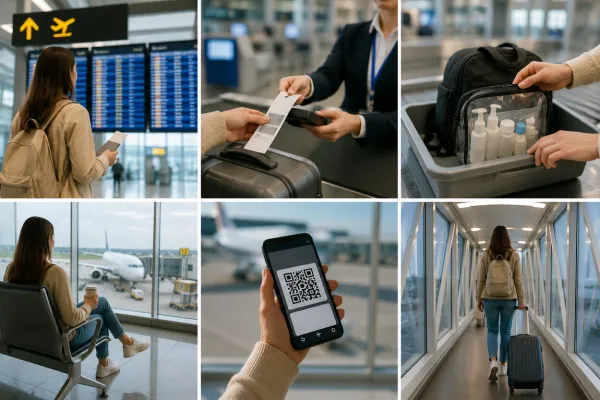
How does airport security screening work, step by step? The whole process starts well before the X-ray queue. First you go through check-in (either online or at the desk), where the airline verifies your identity and issues your boarding pass. Arrive at the airport at least 2 hours before departure, or 3 hours for intercontinental flights. You'll find detailed recommendations in our guide on how early to arrive at the airport before your flight.
With your boarding pass in hand, head to security, where staff will first check your ID and boarding pass before letting you into the screening lane. This step moves quickly, so have your documents ready in your hand.
Luggage, liquids, and electronics through the X-ray
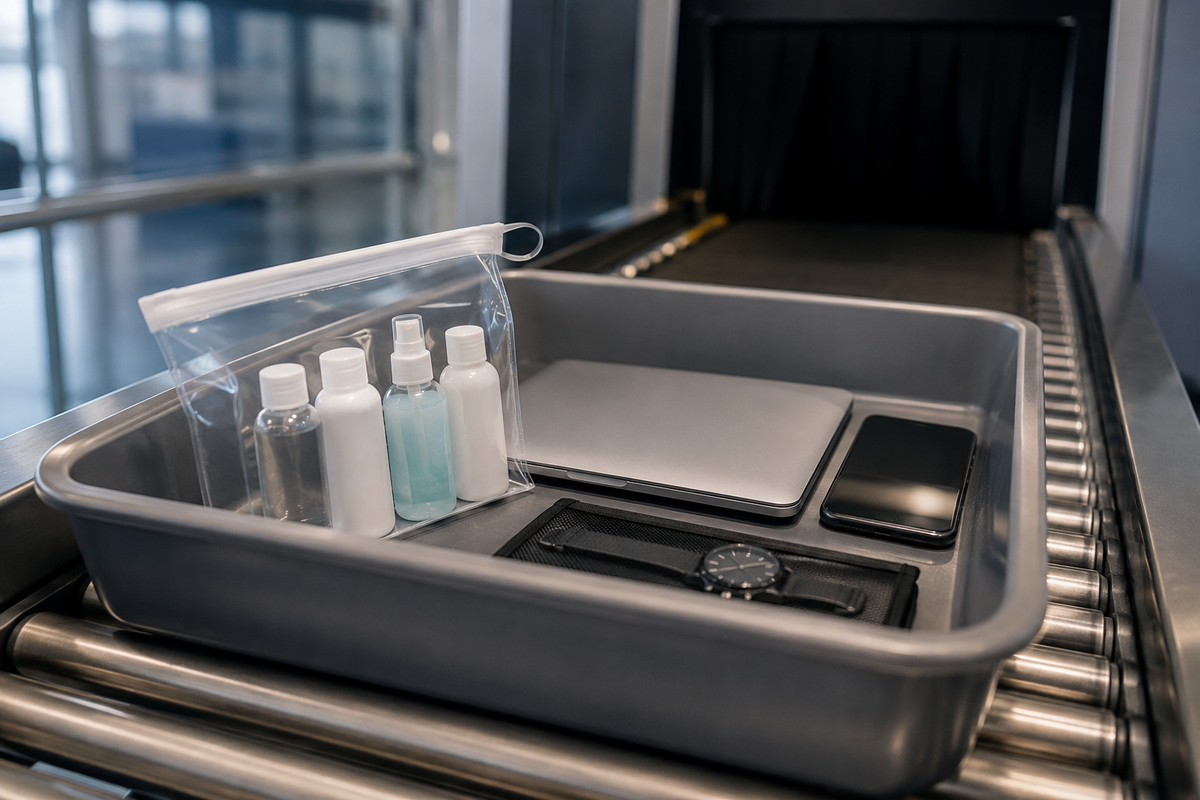
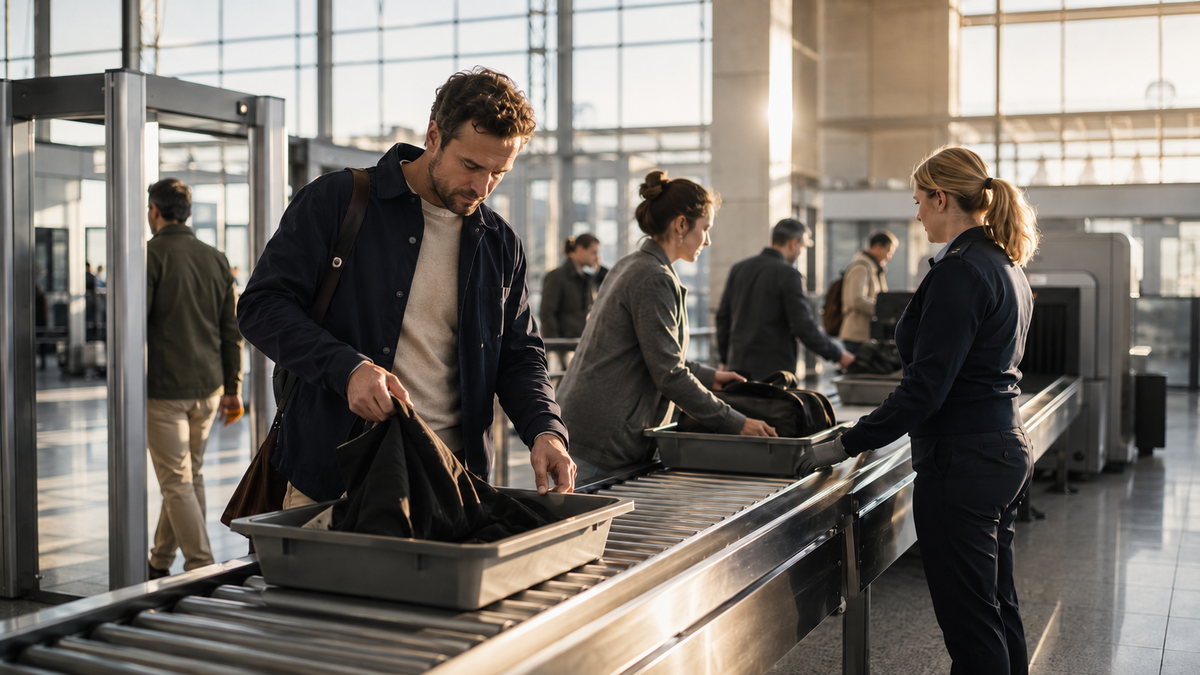
As far as luggage goes, security screening works like this: your carry-on bag or backpack goes through the X-ray while you walk through the scanner. For everything to go smoothly, there are a few firm rules to follow.
Liquids in your carry-on must be in containers of no more than 100 ml each, all packed together in one clear, resealable bag of roughly 1 liter. Take the bag out of your carry-on and place it in a bin on its own. The rules for liquids on a plane apply without exception—a non-compliant bag goes straight in the trash, no warning given. The rules are covered in more detail in our overview of carry-on luggage dimensions.
Laptops and tablets must come out of your bag and go into a separate bin. Smaller electronics such as phones or e-readers can stay in a bin with your bag or go separately. Power banks belong in carry-on luggage only—never in a checked suitcase, under any circumstances.
Walking through the scanner and personal items
Before stepping into the security scanner, take off your coat or jacket and put it in a bin. The same goes for belts, metal jewelry, and watches. Shoes with metal parts or thicker soles can also set off the alarm, so it's safer to take them off in advance.
Everything metal from your pockets goes in a bin: keys, coins, phone, lighter. Empty pockets = a silent scanner.
If you have a metal implant, a pacemaker, or a piercing that can't be removed, tell the staff before walking through. They deal with these situations all the time and will switch to a manual check. Carry a medical certificate for your implant, especially when traveling outside the EU.
Once you're through, remember to gather all your belongings from the bins and check that nothing is left on the belt.
Empty pockets, liquids bag on top of your carry-on, boarding pass in hand—screening will go smoothly. And parking? That can be sorted long before you leave, thanks to our airport parking comparison tool.
Random checks and personal searches
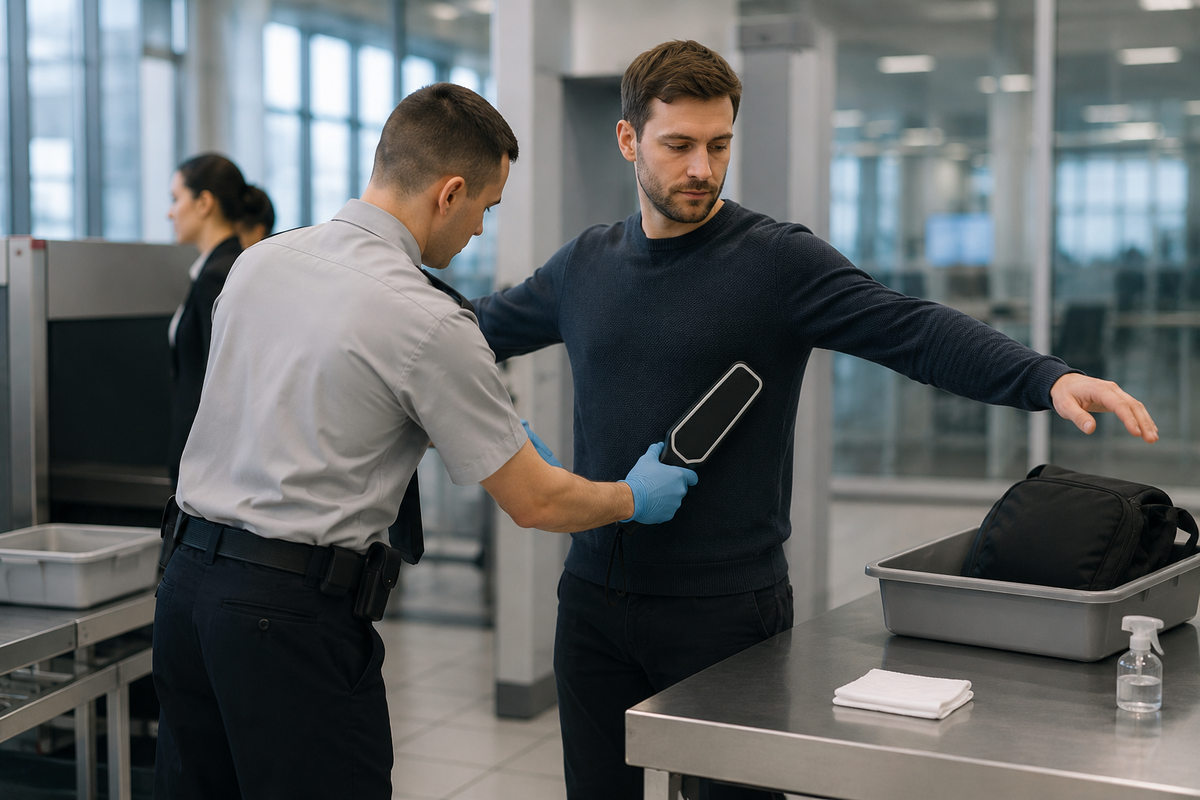
A beep from the scanner isn't a problem in itself. Staff will either ask you to walk through again or move on to a hand-held detector check. It takes about a minute and can be done behind a screen or in open view, whichever you prefer.
Occasionally, staff may ask to inspect your shoes—just take them off and walk through again. At some airports, suspicious items are swabbed for explosive traces; it's a quick procedure with a swab run over your hands or luggage.
Random checks can happen at any time, with no reason given. It doesn't mean you're personally under suspicion—it's standard security protocol. Staying calm and cooperating with staff will make the whole process noticeably shorter.
Security screening at Prague Airport – what not to forget
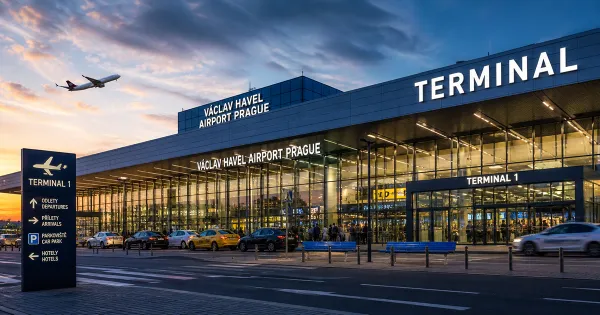
Security screening at Prague Airport runs at both terminals, and queue length varies a lot by time of day and season. On summer mornings and in afternoon peaks, waits can reach 20 to 40 minutes. That's why it pays to arrive with plenty of time to spare.
Once you're through security, you'll find free drinking-water stations in the duty-free zone. Make use of them—the liquids from your carry-on most likely stayed at home or at the checkpoint.
The most convenient way to handle driving and parking at Prague Airport is parking at Veleslavín or parking right by the airport with a shuttle transfer. Both options are available through our comparison tool.
Whether your car waits for you in a secure, guarded lot or somewhere on a street in the Prague 6 zone is entirely up to you. Our comparison tool shows the differences in price and distance from the terminal—and leaves the decision to you.
Terminal 1 and Terminal 2 at Václav Havel Airport
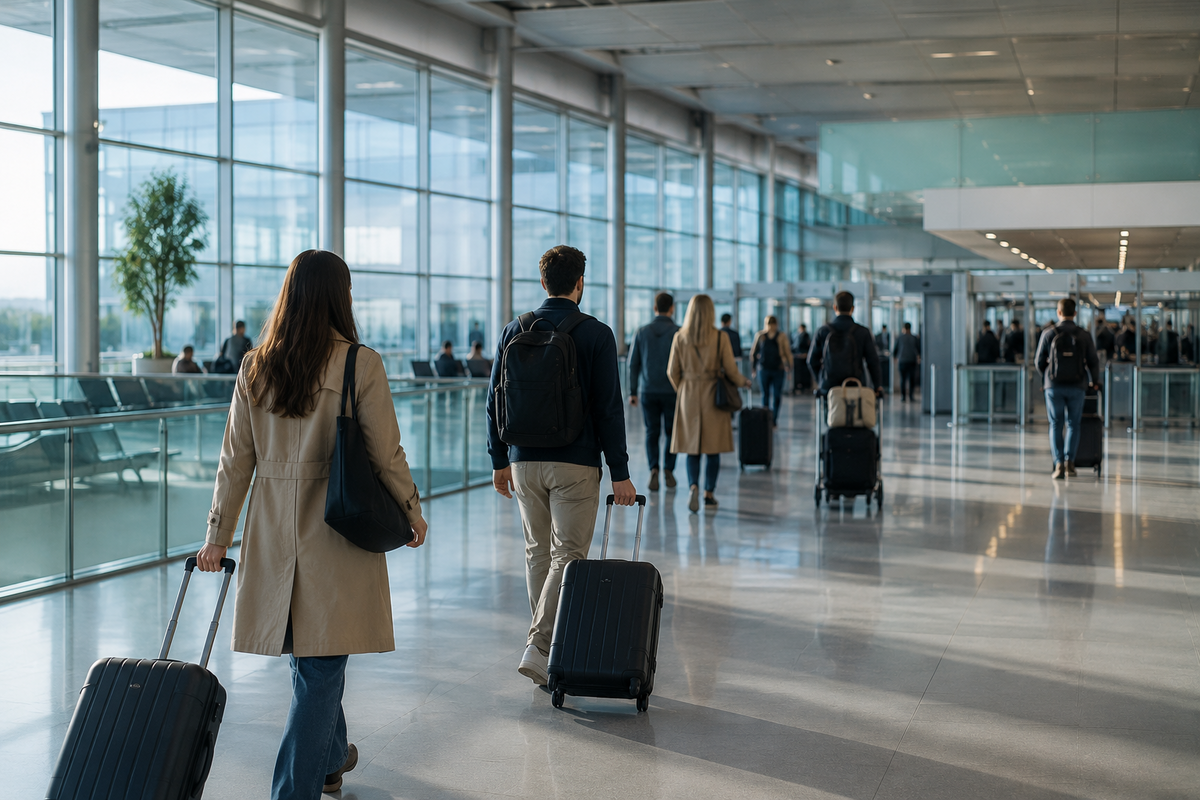
Security screening at Terminal 2 is generally faster. Terminal 2 handles flights outside the Schengen area, which adds a passport check, but the security queue itself is usually shorter than at Terminal 1.
Terminal 1 handles most European Schengen flights and gets much busier in high season. The X-ray queue can top 30 minutes in summer. If you're flying from Terminal 1, add an extra 15 minutes to the recommended arrival time.
You'll always find the right terminal on your ticket or in your airline's app. Moving between terminals is possible, but it takes time.
What travelers' experiences show
Delays usually come down to three things. A forgotten liquid in a large bottle at the bottom of your bag will end up in the trash, no exceptions. Scissors or a pocket knife in your carry-on means confiscation and a hold-up for the whole queue. A power bank in checked luggage? The battery has to move to the cabin, or it stays at the airport.
The practical advice is simple—pack your bag at home, not in the queue. Liquids bag on top, electronics within easy reach, shoes you can slip off quickly. Do this ahead of time and you'll pass through security without stopping.
Flying for the first time and not sure what to expect at the airport, from arrival to boarding? Read our guide to your first flight, which walks you through the whole process step by step.
Ready for security, ready to travel
Airport security screening is a routine procedure that doesn't have to mean a big delay. If you know what to expect, you'll get through without stress and with time to spare for a coffee before departure. Liquids in a bag, electronics out, pockets empty—those three things set the pace of the whole screening.
But before you get into the details of screening, sort out where you'll leave your car on the way to the airport. Our Prague Airport parking comparison with prices and reviews can help.
You can clear security in two minutes if you come prepared. Parking is just as quick—use our comparison tool to compare available guarded airport lots and reserve your spot before you even leave home.