Arrange your parking for the holiday in advance, too. In our comparison tool you can instantly book a guarded car park near the airport with transfers to the terminal and back.
What can't go in carry-on luggage? 5 groups of prohibited items
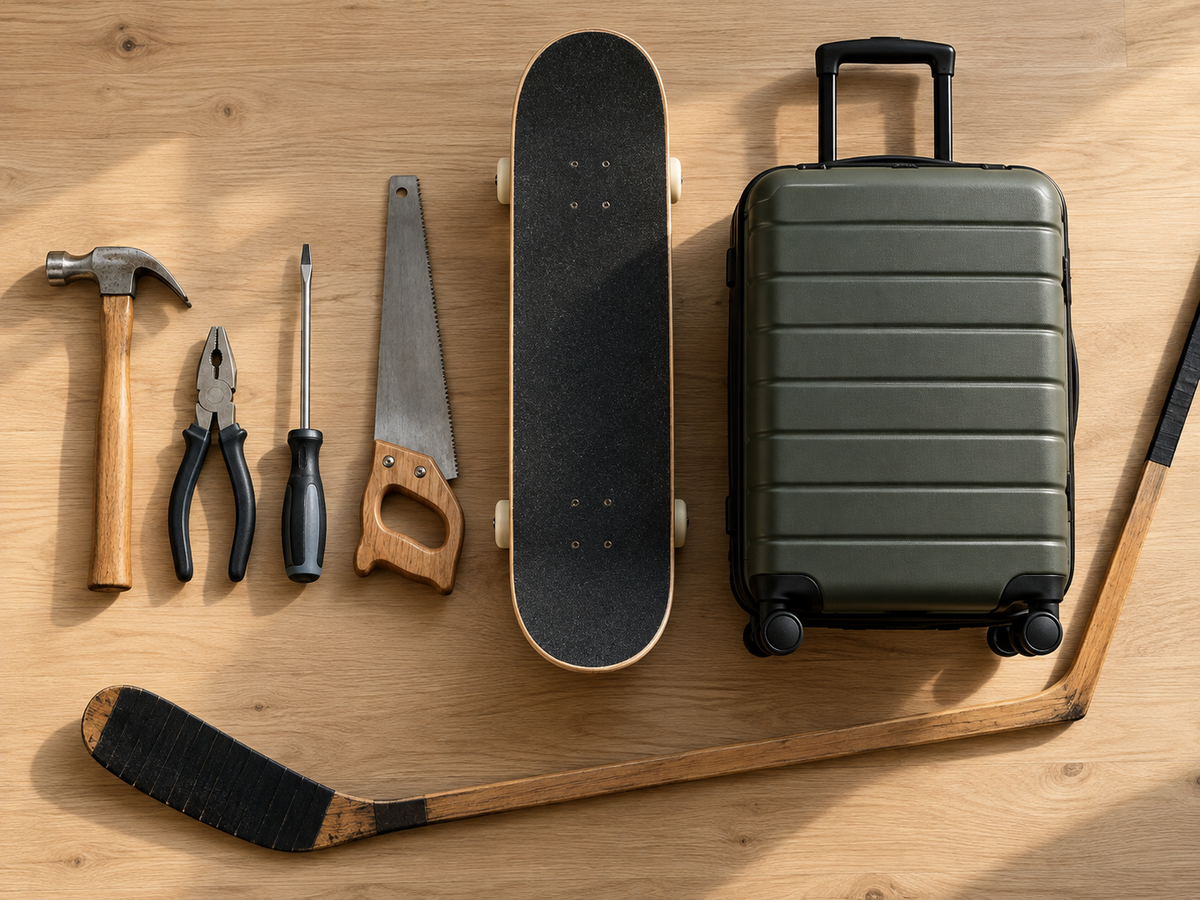
The strictest rules apply on board, because you keep your carry-on with you for the entire flight. Security staff therefore focus mainly on items that could be used to threaten the crew or other passengers:
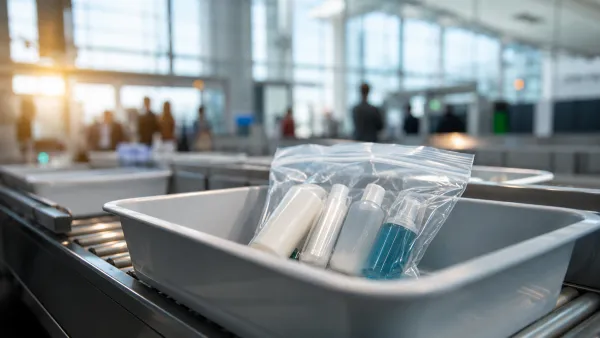
- Liquids in containers over 100 ml. The volume on the label counts, so even a half-empty 250 ml shampoo bottle usually won't get through. The exception is Prague's Terminal 2 (Schengen flights), where since October 2025 you may also carry one container of up to 2 litres. For details on the exceptions, see our article on liquids on planes.
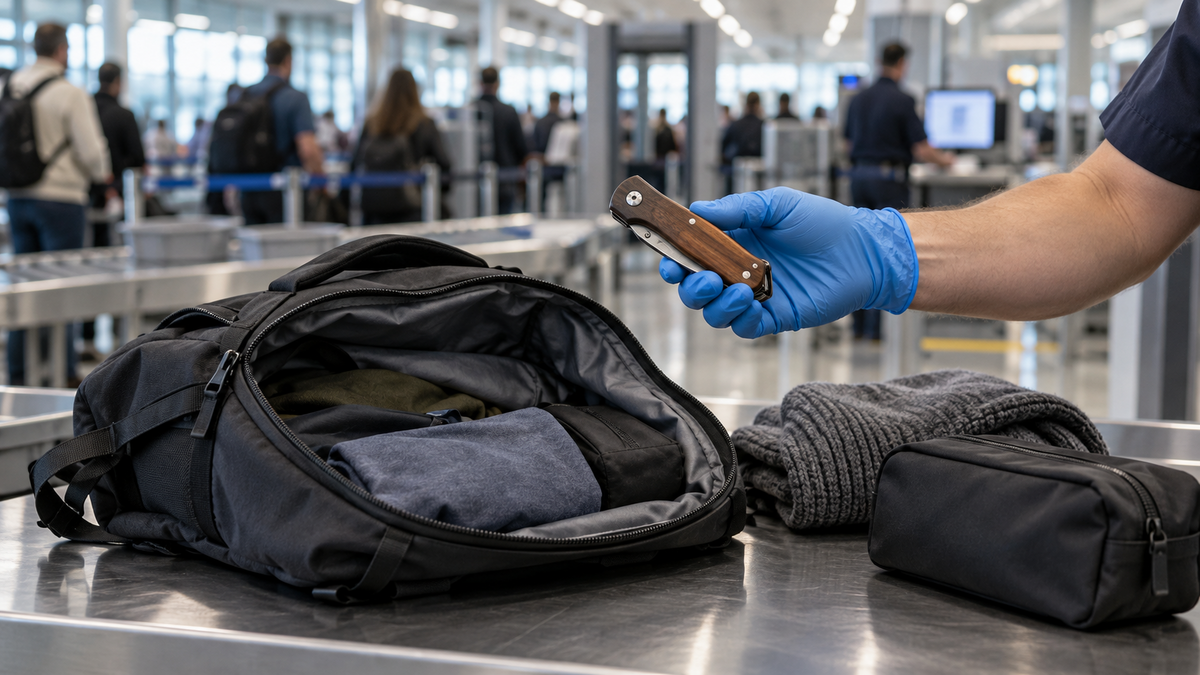
- Sharp objects. Knives and scissors with a blade longer than 6 cm, loose razor blades and tools with a sharp tip belong in the checked bag.
- Weapons and their imitations. Toy pistols and realistic replicas that resemble a real weapon are banned too.
- Workshop tools. Drills, hammers, pliers, saws or screwdrivers with a shaft longer than 6 cm cannot be taken on board.
- Sports equipment. Baseball bats, golf and hockey sticks, ski poles or a skateboard must be checked in as hold baggage.
On the other hand, nail scissors with a blade up to 6 cm, tweezers, a shaver with replaceable heads or metal cutlery without a sharp knife get through without any problems. If you're not sure, pack the questionable item in your checked suitcase, where the sharp-object rules don't apply.
What can't go in checked luggage, and why batteries are the main issue
Checked luggage is a different story. Items that could catch fire must stay out of the hold, because a fire there would not be noticed in time. Take these out of your checked bag:
- power banks and spare lithium batteries, which may travel only in the cabin (more in our article on power banks on planes),
- e-cigarettes and their spare refills with batteries,
- sprays and pressurised containers that are not cosmetics, for example paint or insecticides,
- electronics that cannot be secured against accidental switching on, for example by removing the battery.
You may pack cosmetic aerosols in your suitcase, but a single container must not exceed 0.5 litres and the total per person is two litres.
What must not go on the plane at all, neither in the suitcase nor in carry-on
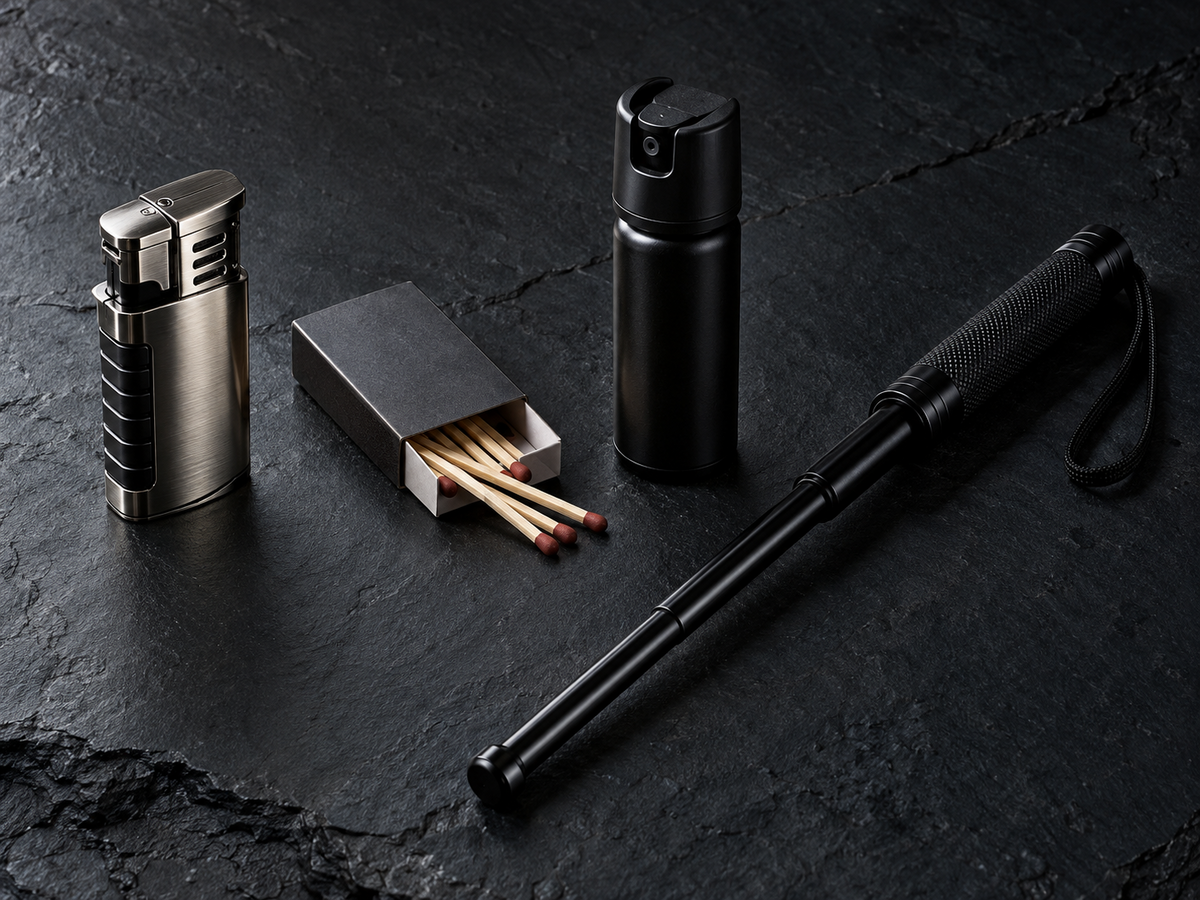
Some items won't get on a plane at all, wherever you pack them. If security staff find them at the airport security check, they end up in the bin, and in worse cases the police get involved. Prohibited items include:
- explosives, ammunition, fireworks and their imitations,
- petrol and jet lighters, and matches that burn even in the wind,
- pepper spray, stun guns, tasers and batons,
- chemical, toxic and radioactive substances, and corrosives.
One ordinary lighter or one box of matches per person is allowed. They must not go in your suitcase, though; keep them on you.
Keep your car safe while you enjoy your holiday. In our comparison tool you can choose a fenced car park with security staff and cameras, where your car waits until you return.
What can't I take on a plane even though it looks harmless? 5 common mistakes
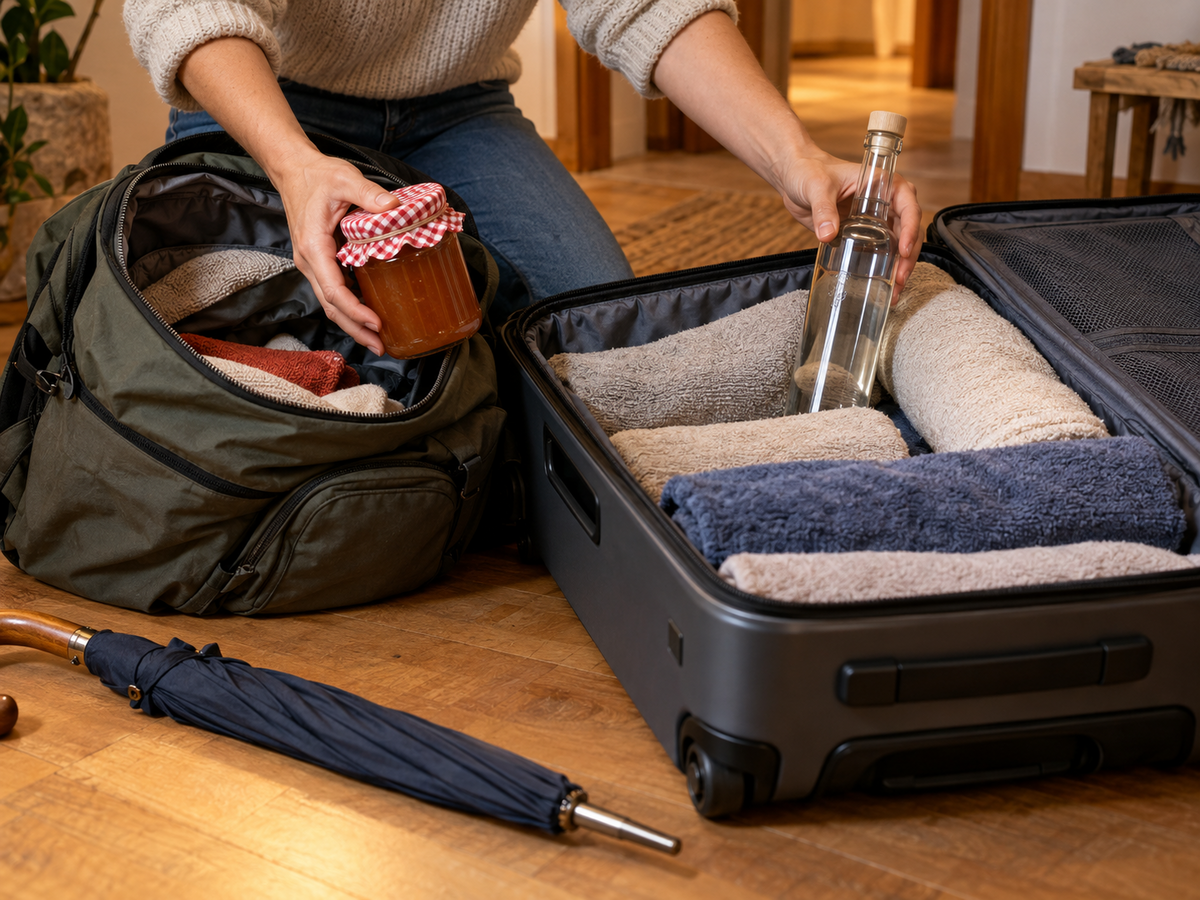
At security, the items that most often get stopped are the ones few people expect to be banned. These are mostly everyday things that travellers pack without thinking:
- Homemade jam, honey or compote count as liquids. In your carry-on they are allowed only in containers up to 100 ml; larger jars go in the checked bag. For more tips on food on planes, see the article food on a plane.
- Alcohol above 70% is not allowed on a plane at all. Weaker spirits can travel in checked luggage in limited quantities, in sealed packaging.
- An umbrella with a metal tip is better off in checked luggage, as a security officer may consider it a dangerous item.
- Spare guitar and violin strings belong in the suitcase; the instrument itself with its strings on usually gets on board.
- Camping gas cartridges are banned completely, so take your stove to the destination without them and buy a cartridge on arrival.
How to check what must not be in your flight luggage
The general rules come from European Union regulations, but individual airlines often tighten them. Before you start packing, go through these five points:
- Check your airline's rules on its website, especially for sports equipment, musical instruments and batteries.
- Cash over 10,000 euros must be declared to customs when entering or leaving the European Union.
- For liquid medicines over 100 ml and stronger medication, we recommend carrying a doctor's letter in English. Our article on medicines on planes explains how to pack them.
- On a connection outside the European Union you will go through another check under local rules. Keep duty-free liquids sealed in their bag until your final destination.
- In unclear cases, call the airline's customer line directly; it saves an unpleasant surprise at the checkpoint.
What must not go on the plane: a brief summary before the last suitcase check
Don't pack liquids over 100 ml, sharp objects, tools or sports equipment in your carry-on. Checked luggage, on the other hand, must not contain power banks, spare batteries or e-cigarettes. Explosives, flammable gases, petrol lighters and self-defence devices must not go on the plane at all.
Check your luggage against this overview at home, before you leave for the airport. Plan the route to the terminal just as carefully. We walk through the booking process in the section Prague Airport parking: how it works.
Airport parking prices can differ by hundreds of Czech crowns a week. In our comparison tool you'll see offers from all car parks side by side, so you can save and pick the one that suits your budget and your journey time.