Before you focus on packing, sort out how you'll get to the airport. Our comparison tool shows available guarded parking lots near the airport, sorted by price and distance from the terminal. Book online in two minutes and pay on arrival.
What Is Checked Baggage and How Does It Differ From Carry-On?
What does checked baggage mean in practice? It's a suitcase, bag, or other container that you hand over at the check-in counter and next see on the baggage carousel after landing. For the entire flight, it's stored in the aircraft's cargo hold – below the cabin, in an unheated or climate-controlled section of the fuselage depending on the aircraft type.
"Hold baggage" or "registered baggage" means exactly the same thing – the terms are interchangeable. They're used less often, but you'll come across them in the conditions of carriage of some airlines.
The main difference from carry-on baggage is that you have no access to the contents of a checked bag during the flight. Anything you'll need on board – whether it's medication, documents, a charger, or valuables – must go in your carry-on. You'll find detailed cabin baggage rules in our overview of carry-on baggage dimensions.
What Exactly Does Checking In a Bag at the Airport Mean?
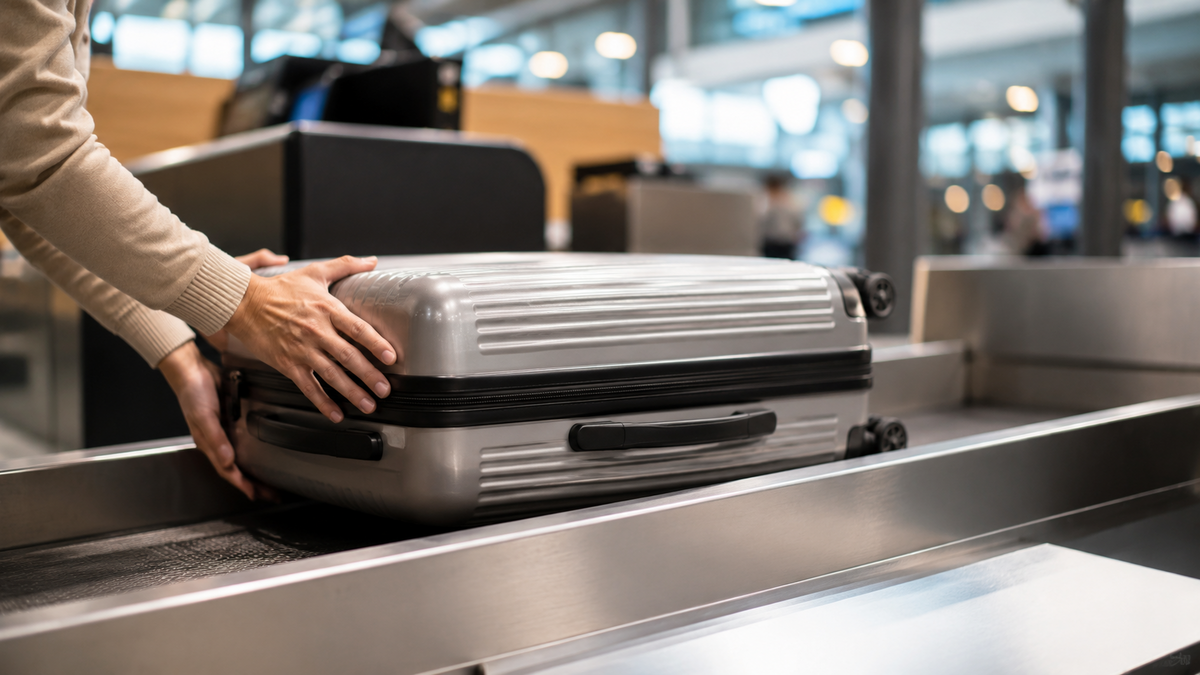
When you arrive at the airport, head to your airline's check-in counter. The staff verify your identity and ticket, weigh your suitcase, and attach a barcoded identification tag to the handle. This tag links your bag to your flight and final destination.
From that point on, the airport takes over. Your bag travels along a conveyor belt to the sorting facility, where it's automatically scanned and routed to the right part of the airport, and finally loaded onto the aircraft. On arrival, suitcases are unloaded and sent to the baggage carousel marked with your flight number.
Online baggage check-in is now available with most airlines. It means you add a bag to your booking or in the app in advance, at a lower price than at the airport. Once there, you go straight to the bag drop counter, skip the check-in line, and save time.
What Are the Size and Weight Limits for Checked Baggage?
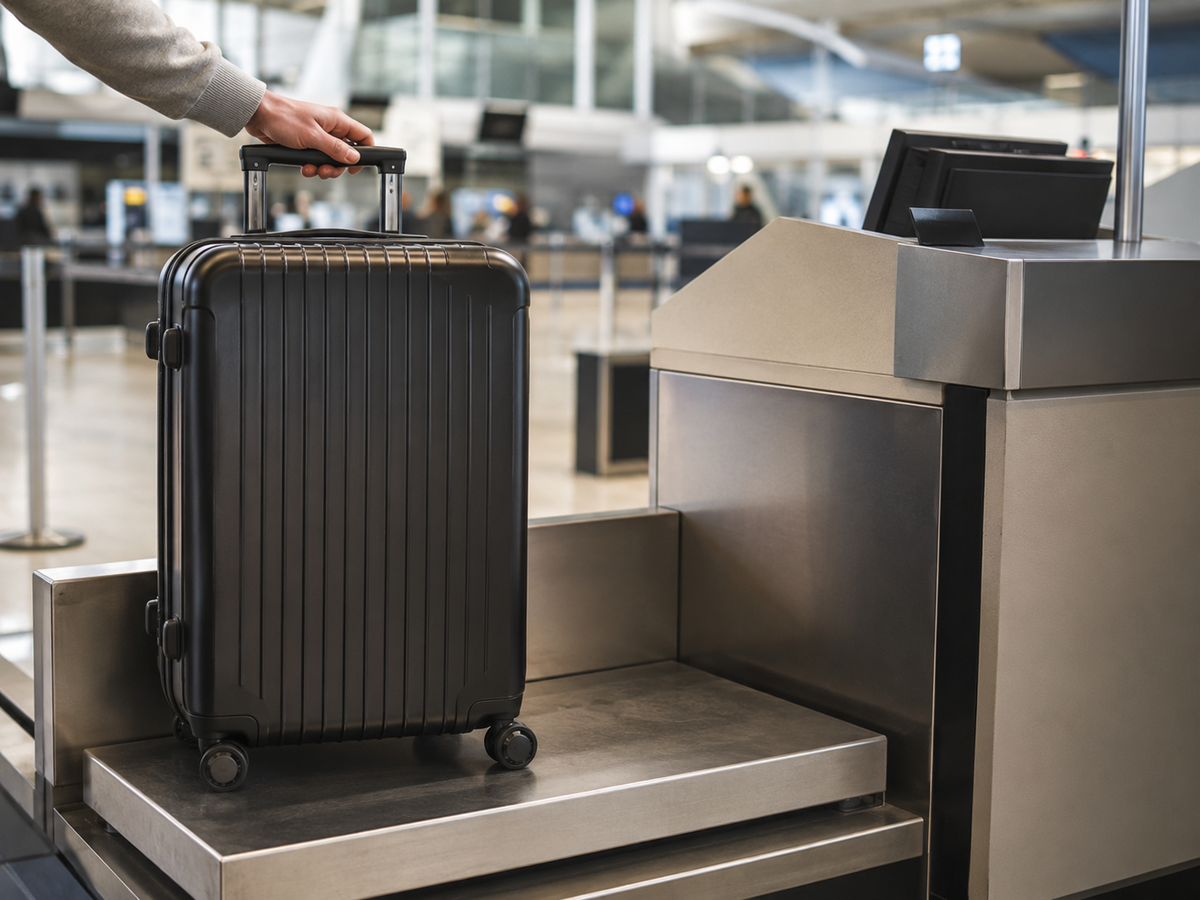
Each airline sets its own checked baggage limits. As a general rule, the sum of a suitcase's three sides (height + width + depth) must not exceed 250 cm. The standard weight limit is 23 kg; the technical maximum set by regulators is 32 kg, but few airlines allow that automatically. Excess weight incurs a fee that's considerably higher at the counter than if you buy extra allowance in advance.
| Airline | Standard Weight | Max. Dimensions (sum of sides) |
|---|---|---|
| Ryanair | 20 kg | 90 × 75 × 55 cm |
| Wizz Air | 23 kg | 90 × 75 × 55 cm |
| easyJet | 23 kg | 275 cm (sum) |
| Smartwings | 20–23 kg (depending on fare) | 250 cm (sum) |
| Lufthansa | 23 kg (Economy) | 158 cm (sum) |
| ČSA | 23 kg | 158 cm (sum) |
Always verify the limits for your specific flight and fare directly on the airline's website. If you have a connecting flight, the stricter rules of one of the carriers on your route may apply.
Special items such as skis, snowboards, bicycles, musical instruments, or diving gear travel for an extra fee and with different size limits. Declare them when buying your ticket, not at the airport.
If you're also after a promo code for Prague airport parking, sort it out in advance together with your baggage purchase. Both work out cheaper online than on the spot.
Good parking lots fill up fast in high season, and so do the discounted spots. Our comparison tool shows their availability in real time – choose, click, and the spot is yours.
What Can Go in Checked Baggage?
The vast majority of items can go in a checked bag with no special rules. Clothing, shoes, cosmetics and toiletries (the 100 ml limit doesn't apply to checked baggage), books, food in its original packaging, sports gear, gifts... All of it can travel in the hold without any issues.
A checked bag is also the right place for backup medication supplies, larger cosmetics containers, and any extra clothing you won't need in the cabin. Valuables, documents, electronics, and medication essential to your health, however, should always stay with you. Also read the rules for medication on planes, especially if you're traveling with injections or liquid preparations.
Which Prohibited Items Don't Belong in Checked Baggage?
The list of items that are banned or strictly regulated in the hold is fairly long. It includes:
Explosives and Weapons
Explosives, fireworks, flares, firecrackers, and ammunition have no place in your suitcase under any circumstances. Firearms can be transported as checked baggage under strictly defined conditions (unloaded, in a locked hard-sided case, reported to the carrier in advance), but that's a separate transport procedure, not standard baggage check-in.
Lithium Batteries and Power Banks
This is the rule travelers break most often – usually without realizing it. Power banks and loose lithium batteries of any capacity are banned from checked baggage without exception. They must always travel in your carry-on in the cabin. The reason is fire safety: under certain conditions, lithium batteries can ignite, and in the inaccessible cargo hold a fire couldn't be put out in time. Read more about the rules for power banks on planes in our separate guide.
Flammable Materials, Corrosives, and Pressurized Containers
Gasoline, diesel, methylated spirits, aerosol lacquers above the permitted limit, paints and thinners, corrosives, acids, and toxic chemicals are banned in both checked and carry-on baggage. The exception is cosmetics in small quantities.
Pressurized containers – for example portable camping stoves, empty diving cylinders (they must be empty with the valve open), or fire extinguishers – have their own transport conditions. Don't pack them without the carrier's prior consent.
Flammable Liquids and Flameless Lighters
Matches are allowed – one box per person, carried in your cabin bag. Lighters with spare fuel and flameless lighters (plasma, arc) are banned from both types of baggage. One ordinary lighter may travel in your carry-on.
Radioactive and Infectious Materials
Radioactive materials and infectious biological substances are governed by special IATA transport protocols. As a passenger, you're unlikely to come across them, but be aware that even medically justified radioactive preparations don't go in a standard suitcase.
Self-Defense Sprays
Self-defense sprays such as pepper spray are banned from checked baggage. There is an exception for a single canister of up to 100 ml with a safety catch, provided it's packed in your checked bag. Much also depends on your destination, though – many countries ban self-defense sprays for tourists entirely.
Air transport rules are based on the international ICAO and IATA regulations, and breaking them can lead to confiscated items, being stopped at customs, fines, or in extreme cases criminal charges. So don't toss things into your suitcase in a hurry – always check the list first.
Beyond baggage questions, we also recommend reading our overview of who shouldn't fly, which covers health restrictions and situations where it's better to consult a doctor before flying.
For a smooth start to your trip, sort out parking ahead of time – use our comparison tool to pick a guarded parking lot with a shuttle straight to the terminal and reserve your spot in a matter of minutes. Then you can drive to the airport with peace of mind.
What Does Traveling Without Checked Baggage Mean?
Traveling without checked baggage means flying with just a carry-on in the cabin. It pays off on short trips, where you can get by with less and save on the baggage fee at the same time. With low-cost airlines, that's a saving of 15 to 50 EUR on a round trip.
Size-wise, the standard carry-on rules of your airline apply. On Ryanair's basic fare that's a 40 × 20 × 25 cm backpack; easyJet allows a more generous 45 × 36 × 20 cm. Without priority boarding on low-cost carriers, there's a risk that gate staff will put larger cabin bags in the hold – free of charge, but with no guarantee.
Skipping checked baggage doesn't pay off on trips longer than five days, when traveling with a child, or when you need special equipment. What you save on the bag can easily go straight to fees at the gate.
Online Baggage Check-In – How It Works and Why It's Worth It
Checking a bag in online means purchasing the baggage allowance in advance through the airline's website or app – not physically checking the bag in without being at the airport. That part always happens at a counter or a self-service check-in kiosk.
With most airlines, baggage bought online is 30 to 50% cheaper than adding it at the airport counter. Ryanair, for example, charges roughly 14–25 EUR for a 20 kg bag bought in advance; at the gate it's typically 50 EUR or more.
The process is simple: after buying your ticket, or anytime before check-in, open your booking, select the flight, and add a bag. The confirmation arrives by email and is tied to your name and booking reference. At the airport, staff verify it by scanning the code.
Before you buy, always check the limits for your specific fare and carrier. They vary even within a single airline depending on the destination or season.
How to Prepare Your Baggage for a Smooth Flight
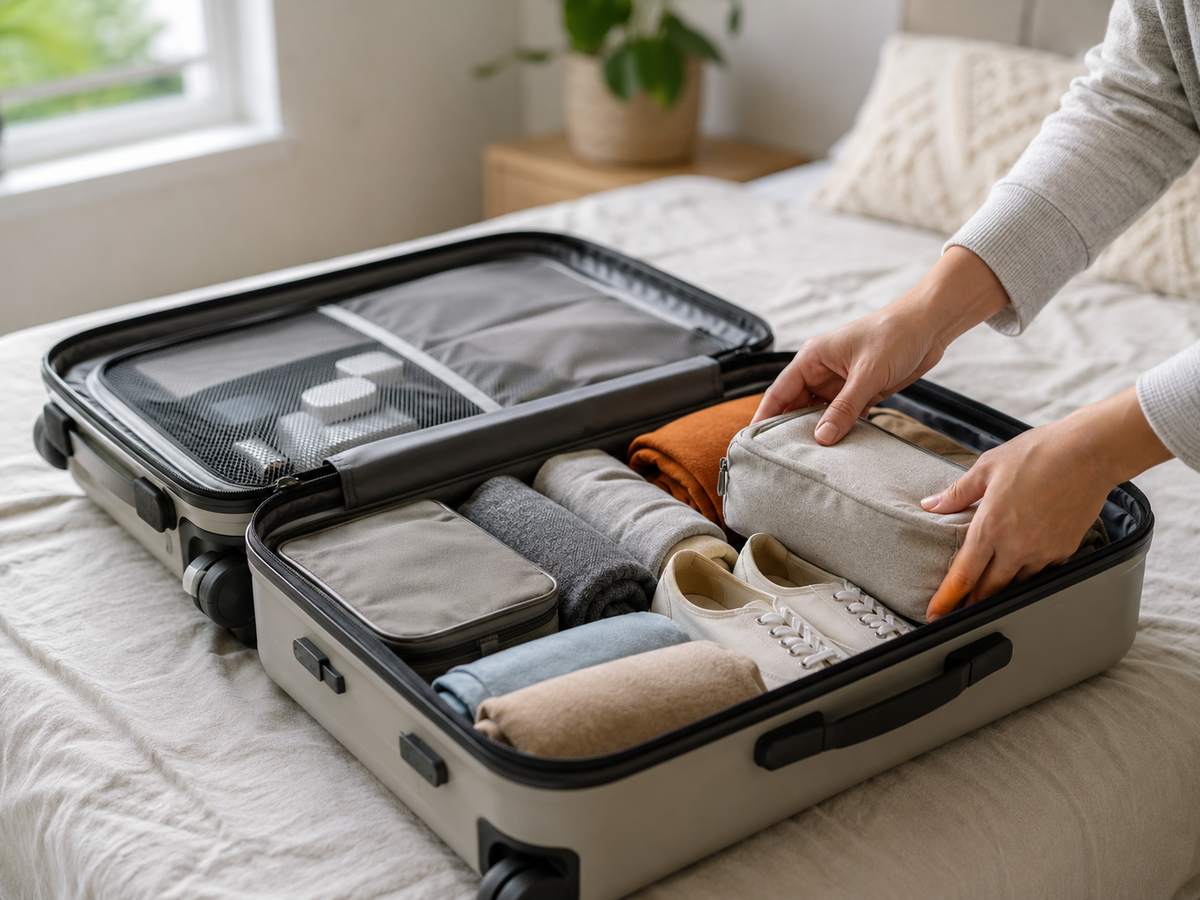
Weigh your suitcase at home on a digital luggage scale. It costs just a few euros and spares you an unpleasant surprise at the counter. If you're close to the limit, move heavier items into your carry-on or cabin bag.
Attach a tag with your name, phone number, and email to your suitcase or its handle. The airline's identification tag can get damaged during handling; a personal tag is your insurance against loss.
A TSA lock comes in handy when flying to the USA and other countries where security routinely opens checked suitcases. Security staff carry special keys for TSA locks that comply with all the relevant customs rules, so your bag can be inspected without damage and your belongings stay intact.
A protective cover or wrap shields your suitcase from scratches, tears, and moisture. On longer trips, or connections with extra handling, the investment pays for itself.
Never leave valuables, jewelry, passports, money, electronics, or medication in a checked bag. Baggage cover in travel insurance usually excludes valuables, or covers them only up to a very low limit.
All That's Left Is to Pack – and Head to the Airport
Limits checked, prohibited items sorted, bag packed. All that's left is to get to the airport on time and without complications. Sorting out in advance where you can actually park near the airport – and whether your car will be safe there – spares you some of those complications too. You'll find an overview of verified parking lots in our Prague airport parking comparison, complete with current prices and ratings from travelers.
Compare available guarded parking lots near Prague Airport by price, distance from the terminal, and traveler ratings. Pick a spot and confirm your booking in moments, with free cancellation up to 24 hours before arrival. And your spot is guaranteed whatever the season.