Driving to the airport? In our comparison tool you can easily choose a guarded car park nearby and book your spot right away. Your car will be safe while you're away.
Can I take my own food on a plane? The basic rules
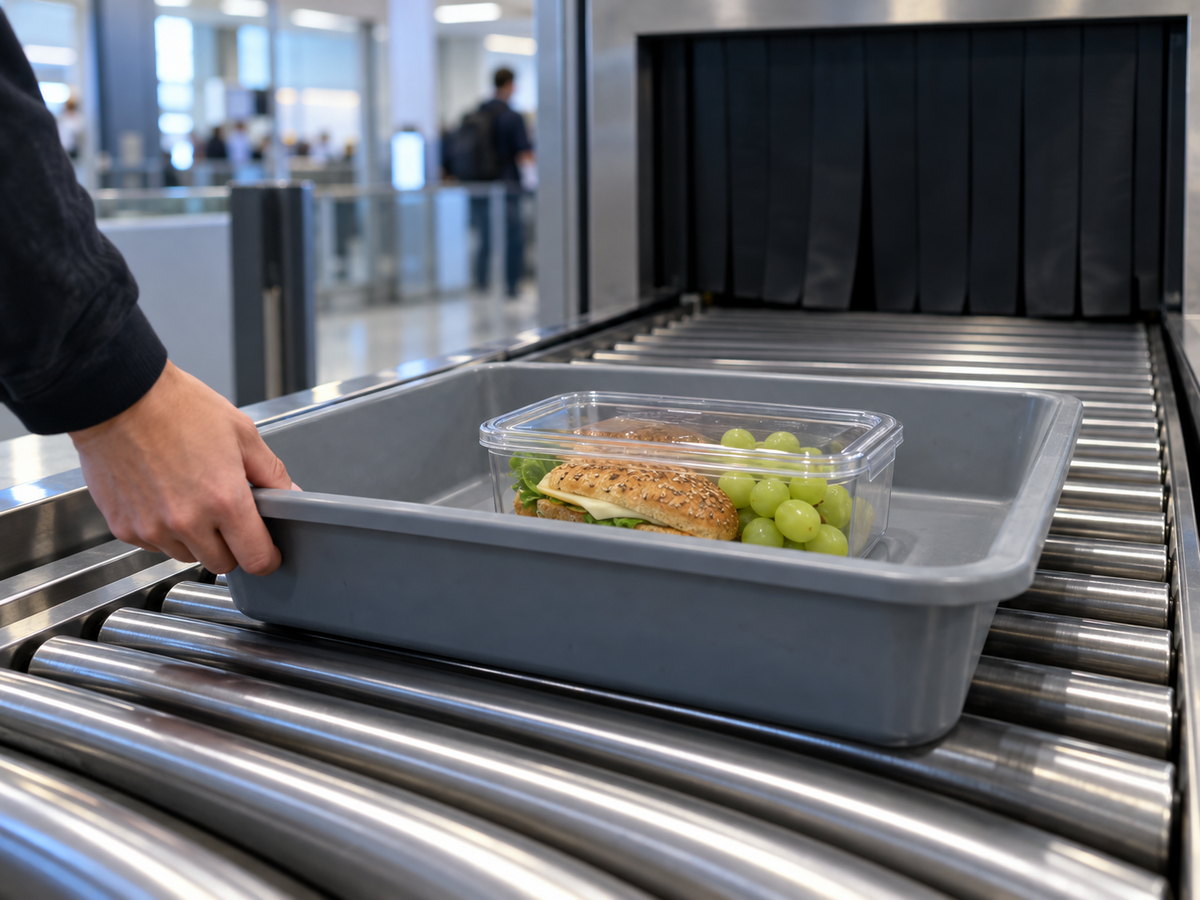
You can take your own food on a plane, both in your hand luggage and in checked baggage. Security doesn't care whether it's a sandwich or a chocolate bar; what matters most here is the consistency of the food.
Solid foods can go through without restriction. So bread, fruit, vegetables, hard cheese, nuts and biscuits can all be packed in any quantity, as long as they fit in your bag.
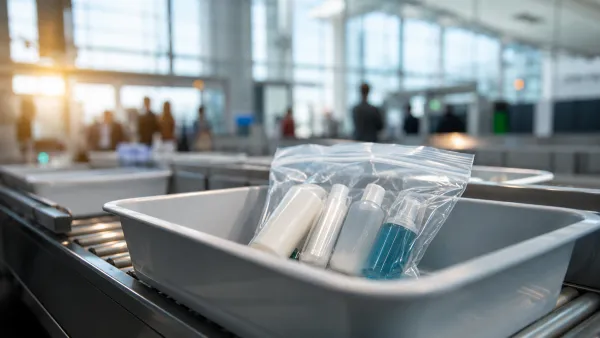
Liquid and semi-liquid foods, on the other hand, follow the liquid rules. Yoghurts, dressings, sauces or soups may therefore usually be in your hand luggage only in containers up to 100 ml, placed in a transparent one-litre bag. When departing from Prague's Terminal 2, you may also take one container of liquid of up to 2 litres.
Pack food preferably in its original packaging with a legible label. Put your home-made snack in a clear box so the officer can see at a glance what is inside and the check goes faster.
You can also eat your own food on board. On long-haul flights a hot meal is usually included in the ticket; with low-cost carriers, however, you have to buy from the on-board menu at high airport prices. On short flights, a snack from home can save you as much as several hundred Czech crowns.
Permitted food on a plane within and outside the EU
On flights within the European Union, meat and dairy products are usually not a problem. You can happily eat sausage, ham or cheese during a flight to Spain or Greece. Outside the EU, however, stricter rules apply to importing food. Many countries ban the import of fresh fruit, vegetables, meat and dairy products, and on the return trip the same ban applies to bringing meat and dairy products into the EU.
Food in checked baggage: no volume limit
The 100 ml limit mentioned above does not apply to checked baggage. You may therefore pack a jar of home-made jam, honey or pâté in your suitcase. But wrap each container in a resealable bag and surround it with clothes so it doesn't break during handling. For more tricks on making the most of your luggage space, see our article how to pack a suitcase for a flight.
What food can I take on a plane? 4 snack tips
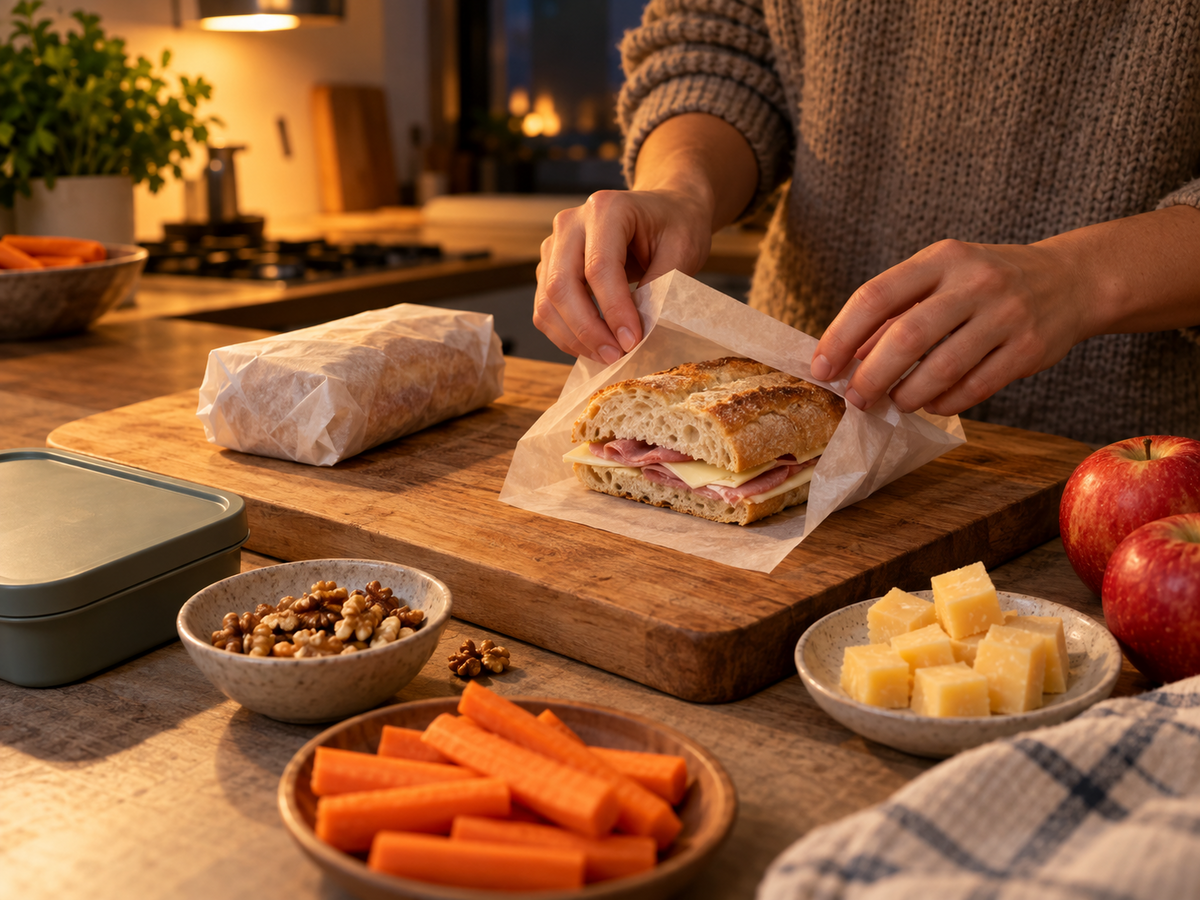
The ideal food for the plane is solid, doesn't smear, doesn't smell and keeps for several hours without a fridge.
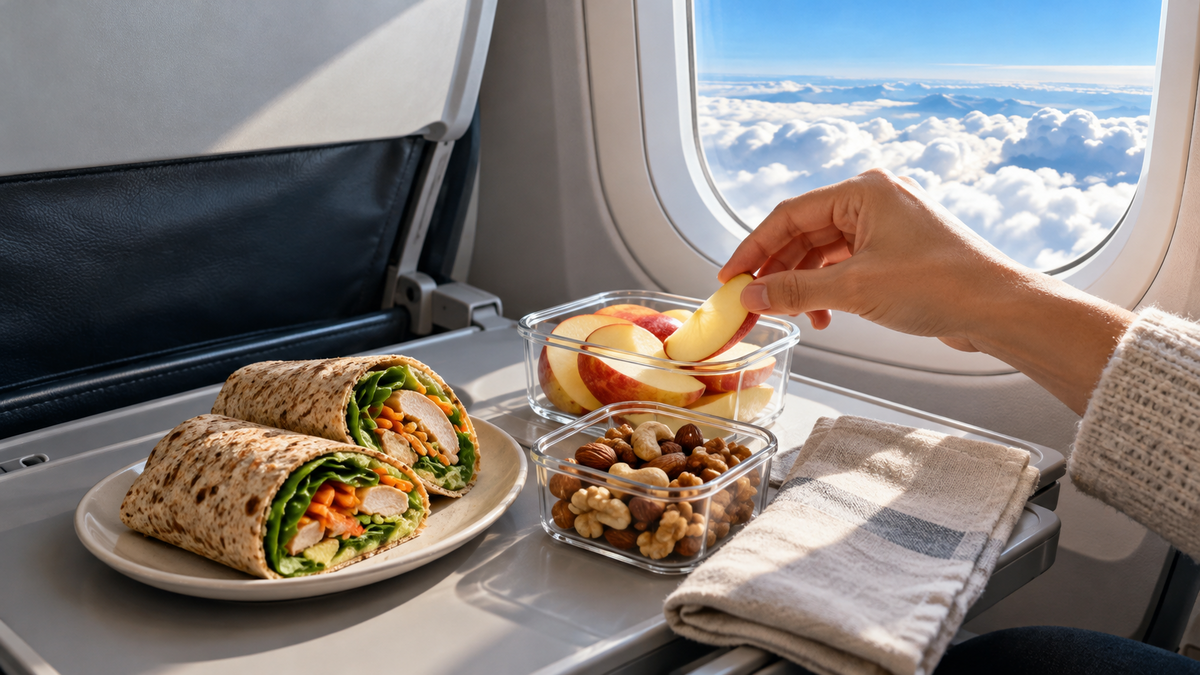
Filled bread rolls, sandwiches and wraps
A filled roll, baguette or tortilla is the most popular snack for the road. You can pack sausage, salami and ham in them. Leave out only the liquid and creamy ingredients, i.e. mayonnaise, ketchup and sauces, which count as liquid and can easily make the bread soggy.
Fruit, vegetables and hard cheese
An apple, a banana, a carrot or a cucumber will last all day in a bag. Add some hard cheese, such as Edam or Comté, and a handful of nuts. Snack bars and biscuits are also handy as a source of quick energy while you wait at the gate.
Sweets without restriction
You can take chocolate, sweets and chewing gum in any quantity. Chewing gum or a boiled sweet also helps balance the pressure in your ears during take-off and landing.
Foods to watch out for
Yoghurts, jams, pâtés, spreads and soft cheeses, such as Camembert or the Czech Hermelín, are treated as liquid at the checkpoint. In hand luggage they will pass only in packs up to 100 ml. The same applies to food with sauce, for example goulash in a box. For the exact rules on this, see our article liquids on a plane.
Don't want to look for a free spot at the terminal early on the morning of departure? In our comparison tool you can easily find guarded parking with a transfer to the departure hall, and that's one less thing to worry about.
Baby food and special diets on board
For infants and some passengers, there are exceptions when it comes to food. What are they?
Infant formula and children's snacks
Formula milk, fruit purées and baby food are exempt from the 100 ml limit. You may take them in the quantity needed for the whole journey. At the security check, present them separately and expect the officer to test them. For more tips on travelling with little ones, see our article flying with a baby.
Allergy, vegan and gluten-free diets
Many airlines offer special on-board meals for people with allergies, vegans or those on a gluten-free diet. However, you must order it in advance, usually no later than 24 to 48 hours before departure. Low-cost carriers mostly don't offer special menus. With them, and on short flights, it's safest to take your own safe snack.
Food and drink on a plane: what simply won't get through
Some foods and drinks will inevitably end up in the bin at security. So don't pack these in your hand luggage:
- drinks and liquid foods in containers over 100 ml, including water and juice (the exception is one container of up to 2 litres when departing from Prague's Terminal 2),
- alcohol over 100 ml, unless you bought it at duty free after the security check,
- ice cream and ice, which are treated as liquid at the checkpoint,
- fresh fruit, vegetables, meat and dairy products on flights to countries that ban their import.
Don't open duty-free alcohol during the flight. On board you may only drink what the crew serves you. For a full list of banned items, not just food, see our article what is not allowed on a plane.
What to do if your food doesn't get through security
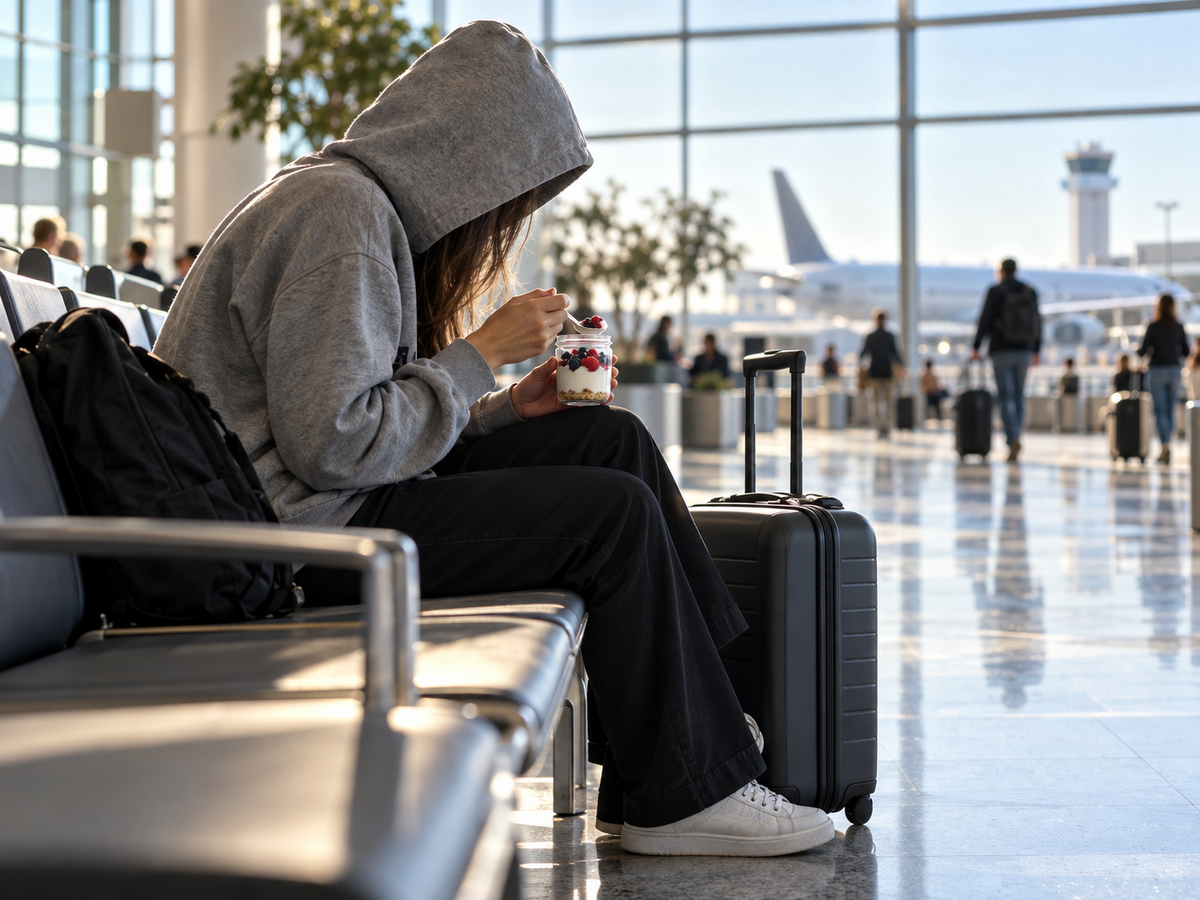
If the security officer classifies a food as liquid, you are not allowed to keep it in your hand luggage and it ends up in the bin. You usually won't have time to go back to the check-in desk and put it in the hold. So it's better to eat any questionable food before you join the security queue, or simply send it in checked baggage. That way you'll lose less food and less time.
Planning a last-minute departure? In our comparison tool you can see free spots at airport car parks even a few days before your trip and confirm your booking online straight away. Don't leave parking until the day of departure!
Food in hand luggage on a plane: 4 practical tips
A few small things before you travel will make getting through security and the flight itself easier:
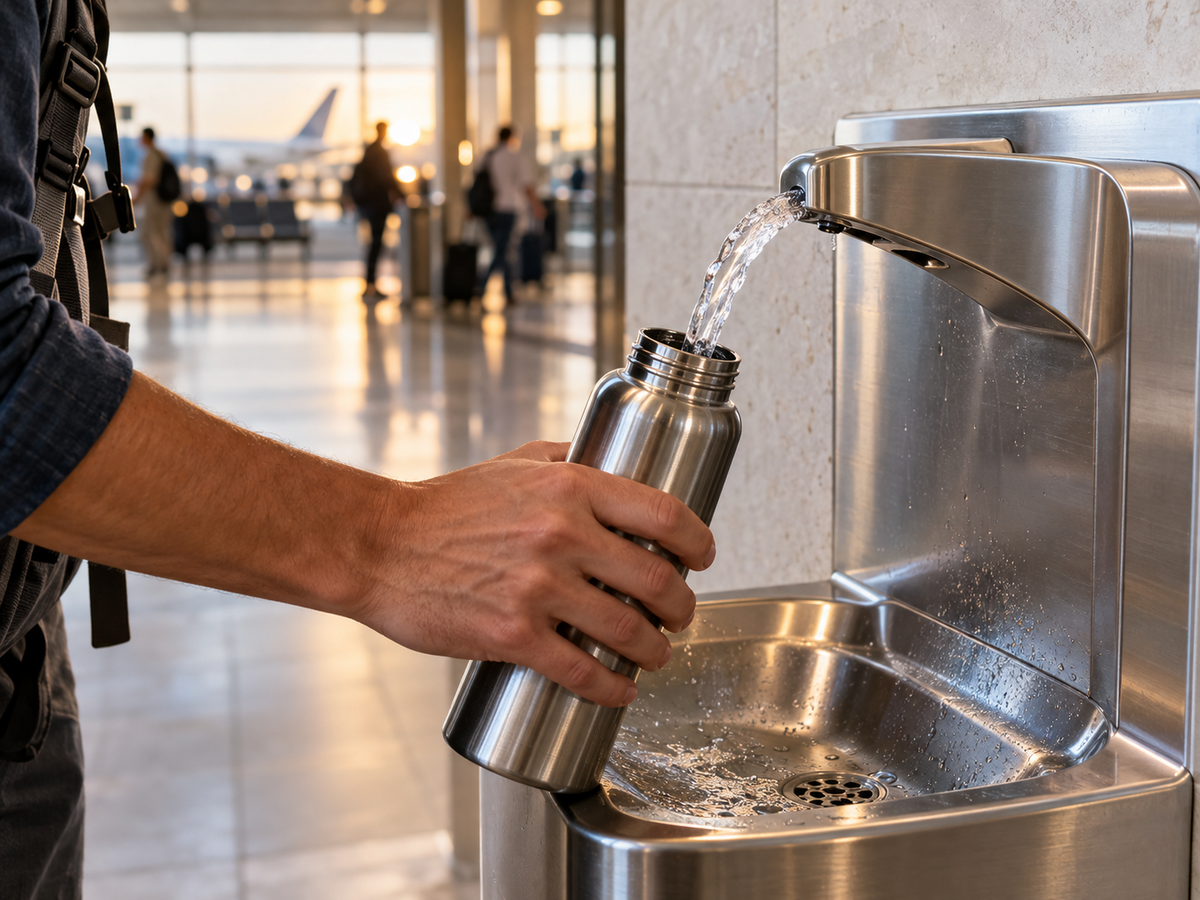
- Take an empty water bottle with you and fill it only after the security check. Many airports have free water fountains, so you'll save on bottled water.
- Take medicines on board in liquid form too, ideally in their original packaging with the leaflet. We explain the details in our article medicines on a plane.
- Pack your snacks in low boxes that fit in the bag under the seat. During the flight you can reach them without having to open the overhead locker.
- Before flying outside the EU, check the food import rules of the destination country. Whatever you don't eat on board must be thrown away or declared at customs on arrival.
Think about other passengers when eating too. Avoid strongly aromatic foods, for example tuna, hard-boiled eggs or onion. If the crew announces a passenger with a nut allergy on board, put off eating your nuts.
And if you're travelling to the airport by car, we recommend arranging parking in advance. You can book right away on the Prague Airport parking page.
Taking your own food on a plane can save money if you meet the conditions
To sum up: solid foods can be taken on a plane without restriction, while liquid and creamy ones are allowed only in packs up to 100 ml. If you have larger jars, send them in checked baggage. Present baby formula separately at security, and order special on-board meals in advance. On flights outside the EU, keep the food import rules in mind too.
Prepare your snack at home the evening before departure. You'll save on expensive snacks at the airport and on board, and you'll know exactly what you're eating. Plan your trip to the terminal just as carefully (and ideally even earlier); our comparison of Prague airport parking clearly shows the prices.
Head to the airport with a clear head and without searching for a spot at the last minute. Book parking in our comparison tool today, and your car will wait safely for you until your return.