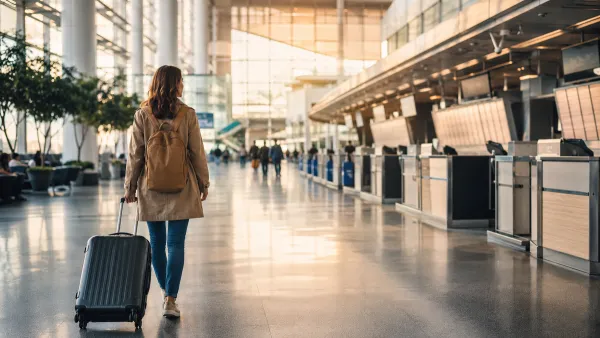
Driving to the airport? Before you start packing your suitcases, get your parking sorted as well. Our comparison tool shows you every secure parking lot around your airport, and booking a space takes about a minute.
How to travel by plane? It all starts with preparation before departure

Good preparation for your first flight starts long before you fold the first T-shirt into your case. Begin by checking that your documents are valid. Within the Schengen area an ID card will do; for flights outside the EU you need a passport valid for at least six months from your date of return. Check visa requirements with your destination in advance, because some countries insist on an electronic visa that cannot be arranged on arrival.
Save your ticket to your phone and keep a backup copy in your email. Always take out travel insurance covering medical care and treatment costs, especially for destinations outside Europe, where a hospital stay can run into hundreds of thousands of crowns.
Check your bags against the rules of your specific airline. Every carrier sets its own weight and size limits for cabin and checked baggage, and those limits differ from fare to fare.
Plan your journey to the airport with time to spare. If you want to drive yourself, look through the overview of free parking at Prague Airport first, and if the free options are not enough, you can book a secure parking lot with a shuttle through our comparison tool. The page on how a parking reservation works walks you through the whole process. And if you want to spend less on parking, read up on how a promo code for Prague Airport parking works.
What you can and cannot take on board
The rules for carry-on baggage are broadly the same worldwide, but individual airlines can differ in the details.
Liquids
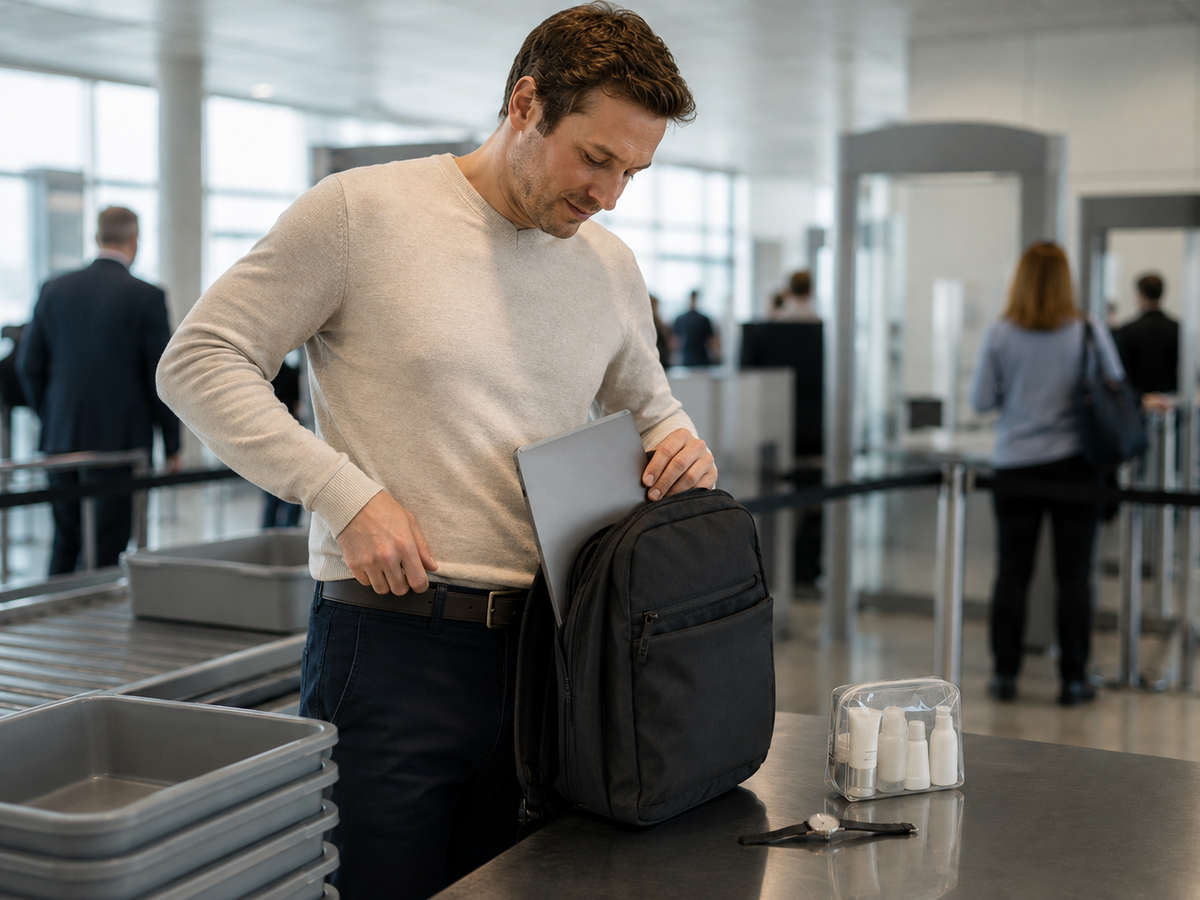
Liquids may go in your carry-on only in containers of up to 100 ml, all of them packed together in a single transparent resealable bag with a capacity of one liter. Toothpaste, cream, sprays and mascara count as liquids too. Take the bag out of your luggage before you step into the security line.
Prohibited items
You cannot take sharp objects (knives, scissors with blades longer than 6 cm), weapons and their replicas, flammable substances, pressurized containers or explosives on board. A fuller list of items banned from checked and carry-on baggage is set out in this guide to checking in your baggage.
Power bank
A power bank always belongs in your carry-on, never in a checked suitcase. The limit is 100 Wh with no approval needed, 100–160 Wh with the airline's consent, and anything above 160 Wh may not be carried at all. Our guide to taking a power bank on a plane goes through the conversion and the rules of individual airlines in detail.
Documents, ticket, insurance and baggage are all ready. What about parking? Our comparison tool takes care of it in moments. Enter your dates, pick by price, services or distance from the airport, and confirm. Cancelling up to 24 hours before arrival is free.
Tips for check-in and airport security
Once you get to the airport, look for the large board marked DEPARTURES. It shows the check-in desk number for your flight. At the desk you hand over your ID and your ticket or booking code, receive your boarding pass and drop off your suitcase to travel in the hold.
Schengen flights from Terminal 2 carry on straight to the security check. Non-Schengen flights from Terminal 1 also pass through passport control, so keep your passport handy.
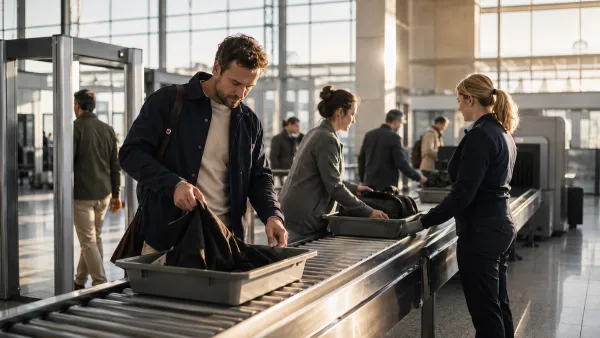
Security screening is compulsory for every passenger. You will need to take your laptop and tablet out of your bag and put them in a tray. Your bag of liquids goes in separately. Take off your jacket, belt and any metal jewelry as well. The whole procedure is described step by step in our article on how airport security screening works.
How much of a time buffer you need depends on your destination. The recommendation is to allow at least two hours for Schengen flights and three hours for flights outside Schengen. In the summer season or at a crowded airport, add another 30 minutes. You will find more precise guidance on how long before departure to be at the airport in a separate article.
What to expect at boarding and during the flight
Your gate is printed on the boarding pass and shown on the departures board. It can still change at the last minute, so keep an eye on the board or on notifications in the airline's app. Boarding starts roughly 45 minutes before departure and the gate closes 15 minutes before departure.
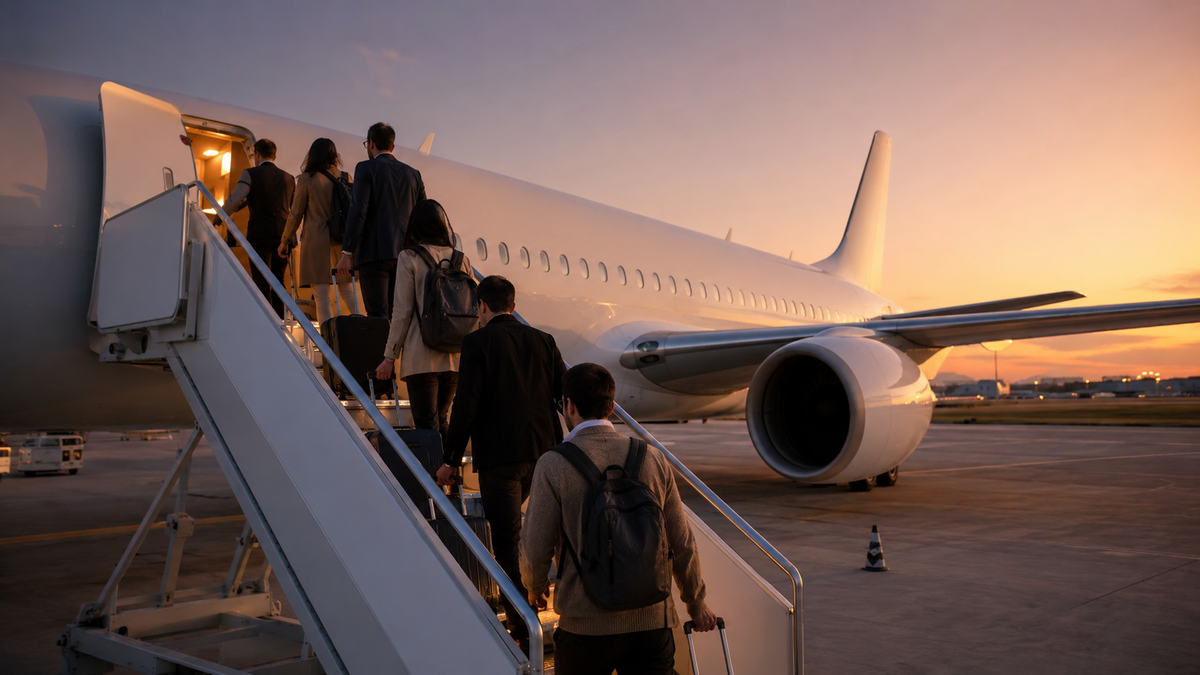
Boarding is done by groups. Families with children and passengers with reduced mobility board first, then business class or priority passengers, and everybody else last. At the aircraft door the crew scans your boarding pass and checks your identity.
Once you are in your seat, switch your phone to airplane mode. Fasten your seat belt and pay attention to the crew's safety briefing. Keep the belt fastened even on a smooth flight, because turbulence arrives without warning. Electronic devices can be used in airplane mode; onboard Wi-Fi differs by airline and by the length of the flight.
The safety of air travel
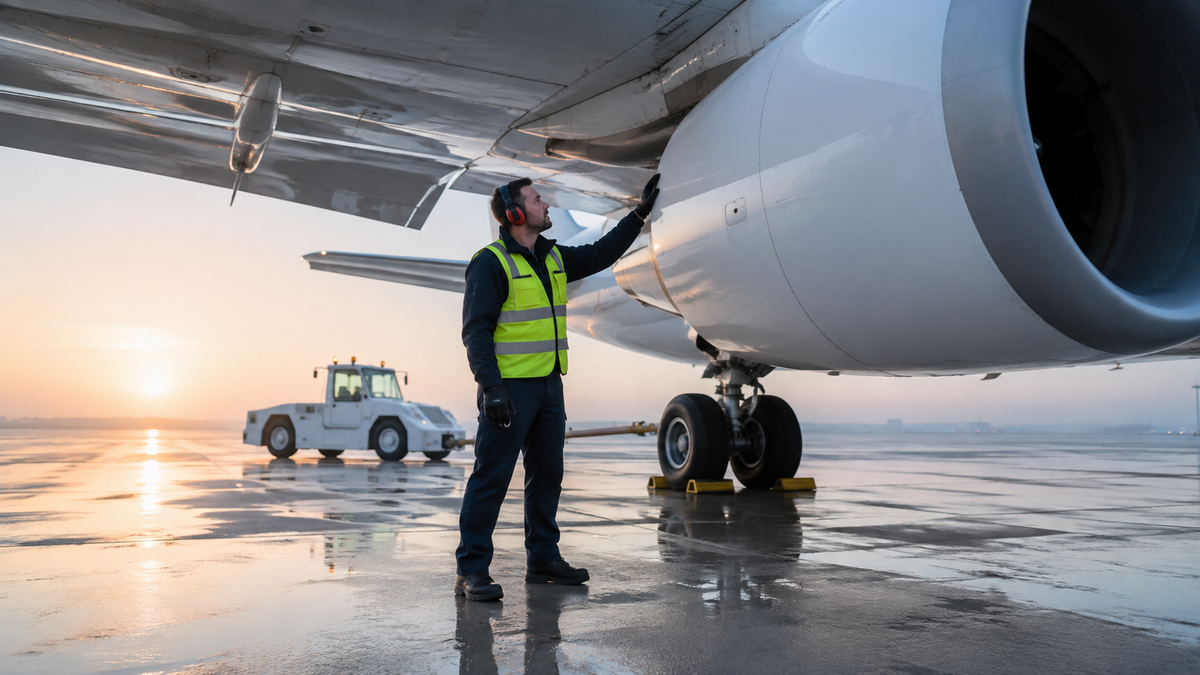
Statistically, the plane is the safest means of transport in the world. The probability of an accident is far lower than in road traffic, and every commercial flight passes dozens of safety checks before it even takes off.
Airport security screening exists precisely so that this statistic keeps holding. The rules on liquids, prohibited items and compulsory scanning are the outcome of specific security incidents that international aviation has learned from.
Travel insurance with medical coverage buys peace of mind for a different reason: it pays for treatment abroad, repatriation or a lost bag. For trips outside the EU, or to countries with expensive healthcare (the USA, Canada, Japan, Australia), it is an absolute must. Check that the policy also covers the activities you have planned, because skiing, diving or mountain hiking are usually left out of basic insurance packages.
The pros and cons of air travel
A plane covers in a few hours a distance that would take days by car or train. That is its main advantage, and nothing else comes close: it opens up exotic destinations and distant continents, and it shifts the balance in favor of time spent at your destination rather than time spent getting there.
Comfort depends on the class and the airline. Economy with a low-cost carrier on a four-hour flight is a very different experience from business class with a full-service airline. Flying keeps getting more accessible. Aircraft now fly to destinations nobody would have dreamed of ten years ago, and ticket prices are in the most affordable range they have ever been.
There are drawbacks too, of course. Baggage surcharges, the liquid limit in carry-on bags, waiting around at the airport and unpredictable delays are all a normal part of air travel. Anyone who knows what is coming can prepare for it, and anyone who prepares takes off with a clear head.
Air travel and tips for the journey home
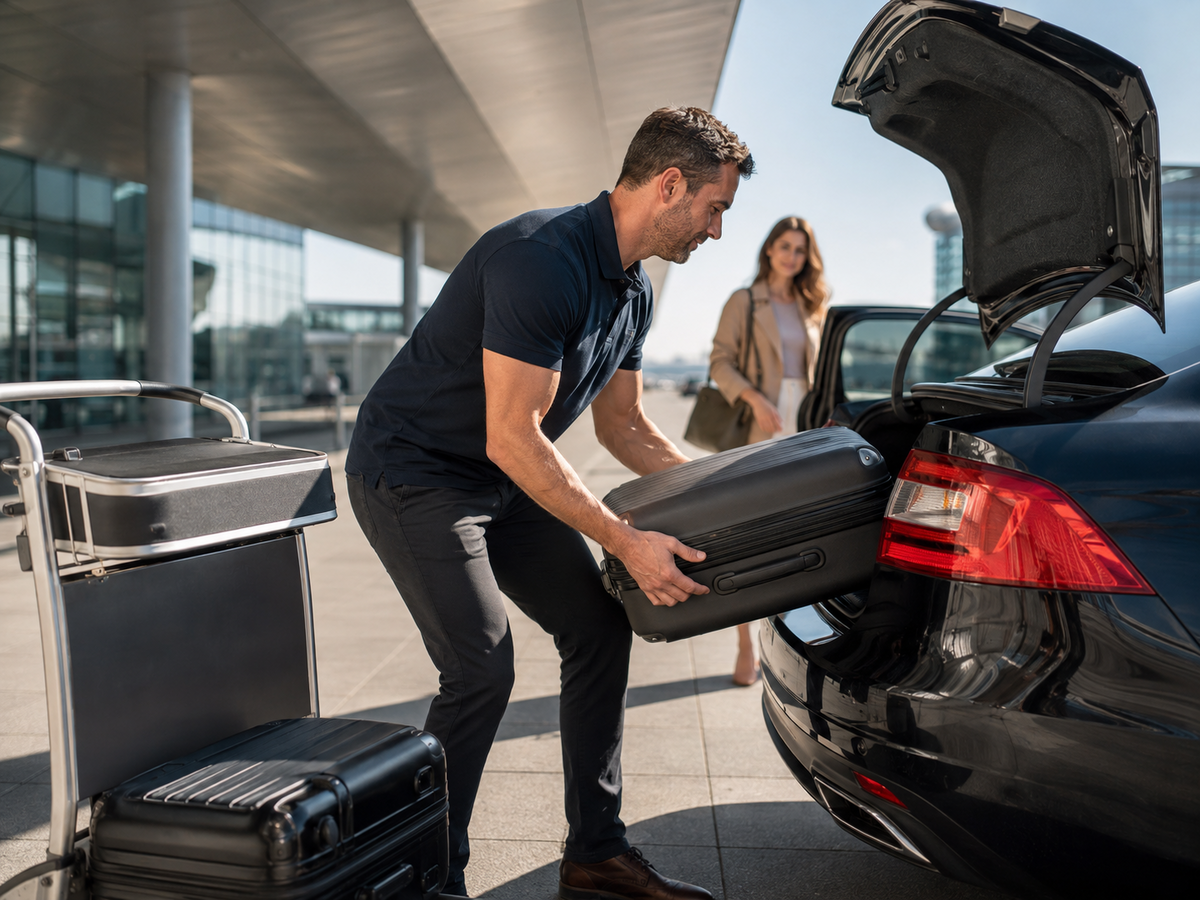
After landing, follow the signs for Baggage Claim. The board in the arrivals hall shows the carousel number for your flight. The average wait is 15 to 30 minutes.
Flights from outside Schengen go through passport control in the arrivals hall. Beyond baggage claim comes customs. The green channel is there for passengers with nothing to declare, the red one for everybody else.
If your bag turns up damaged or does not turn up at all, report it straight away at the Baggage Service Office desk in the arrivals hall. Leave without filing a claim and the situation gets far more complicated.
Once you are out of the arrivals hall, it is time to head home. If you have booked parking with a shuttle to and from the airport, call the operator and the shuttle will pull up right at the arrivals exit. Your car will be waiting exactly where you left it, in a secure lot under camera surveillance.
Anyone can pick up the rules of air travel in no time
Flying follows a clear order. On one side its pillars are documents, ticket, insurance, baggage that follows the rules, arriving with time to spare, check-in, security screening, gate and boarding. On the other side, baggage claim, customs and the drive home.
Do not leave parking to improvisation on the day you fly, book it in good time instead. Our comparison tool lets you secure a guarded space and a shuttle to the airport in both directions well in advance, with no stress.