Heading to the airport by car and don't want to spend ages looking for parking? Compare the airport car parks in our tool and check the transport conditions for you and your pet in advance.
Can a dog fly? First you need to sort out its papers
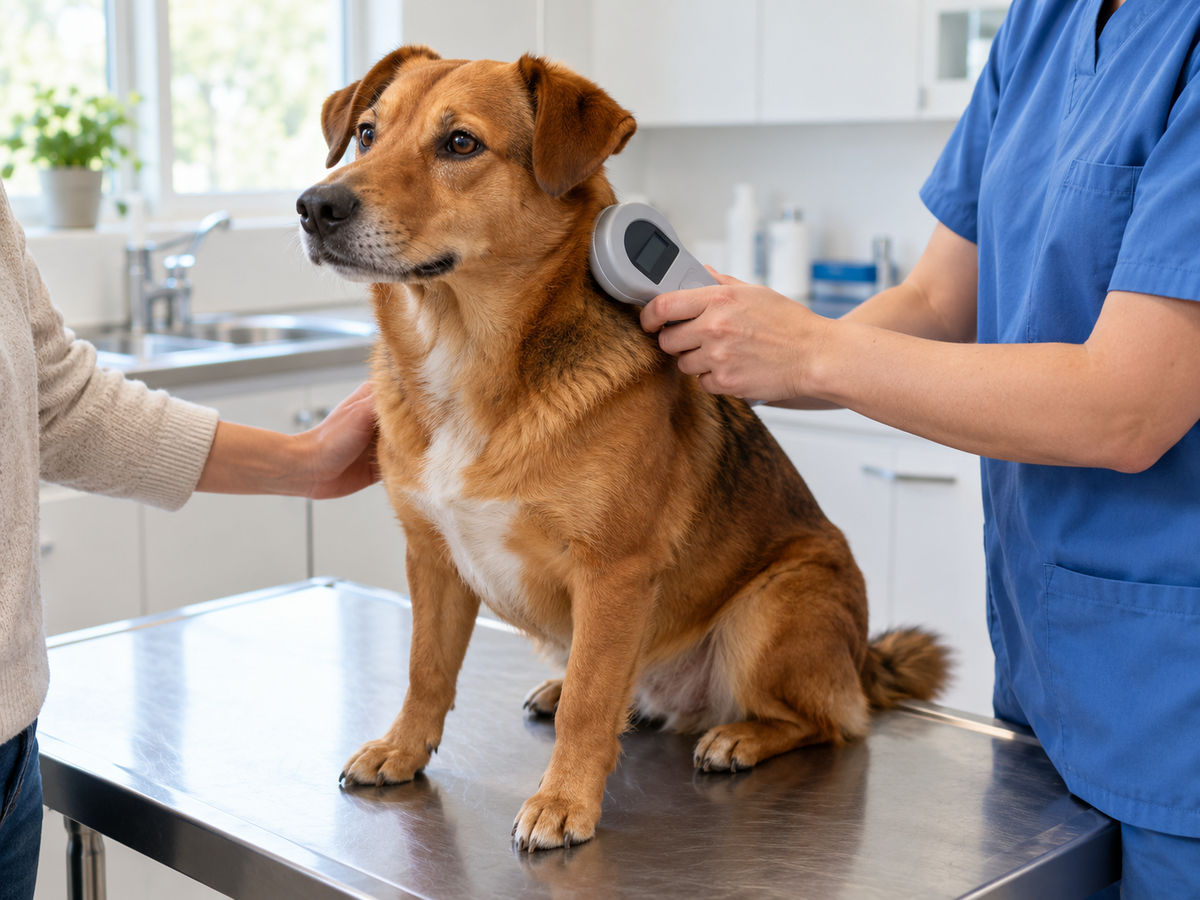
A dog may fly, but it must meet the veterinary requirements of the country you are travelling to. Without valid documents the airline will not let you check in, even on a flight within the European Union. Getting the paperwork can take several weeks, so start early. Always photograph your dog's documents and save the photos on your phone in case the originals get lost.
Microchip and pet passport
Every dog travelling abroad must have an identification microchip. The vet will also issue an international pet passport, in which vaccinations and other treatments are recorded. Have the passport issued by an authorised vet and check that the chip number in it matches your dog's chip.
Rabies vaccination
A valid rabies vaccination is the basic requirement for any trip. The dog must be older than 12 weeks at its first vaccination and may travel no earlier than 21 days after that first shot. If you revaccinate on time, before the previous vaccination expires, the 21-day wait does not start again. A puppy can therefore fly at around 15 weeks of age at the earliest.
Deworming and destination requirements
Some countries also require treatment against tapeworm. These include the United Kingdom, Ireland, Finland, Malta and Norway, where the vet must carry out the treatment and record it in the passport 1 to 5 days before arrival. Rules for countries outside the European Union tend to be even stricter. Many of them require a rabies antibody test, and some island states impose quarantine. Check the current rules for your specific country with your national veterinary authority (in Czechia, the State Veterinary Administration) at least two to three months before you travel.
Dog in the cabin or in the hold?
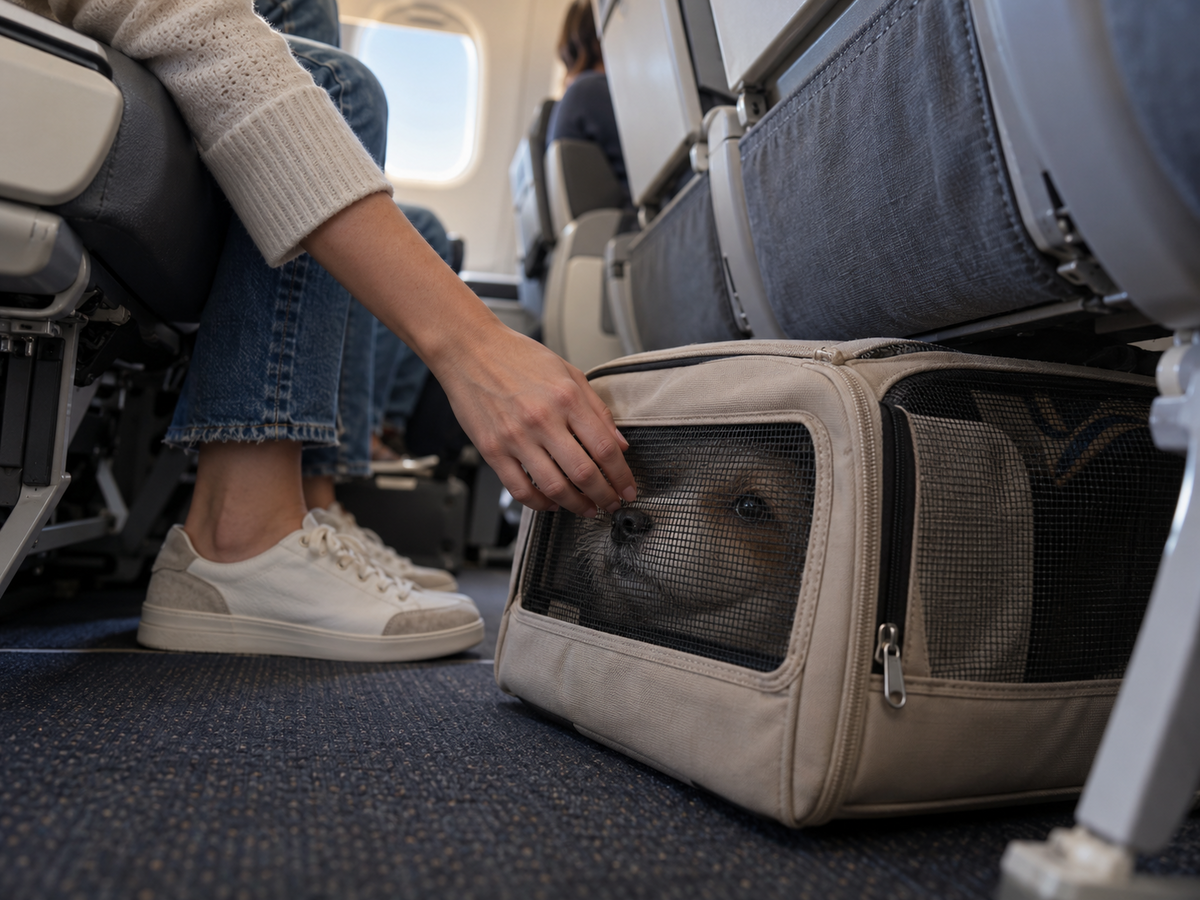
Where your dog flies depends mainly on its weight together with its carrier. Each airline sets its own limits, but most follow similar rules.
Small dogs in the cabin
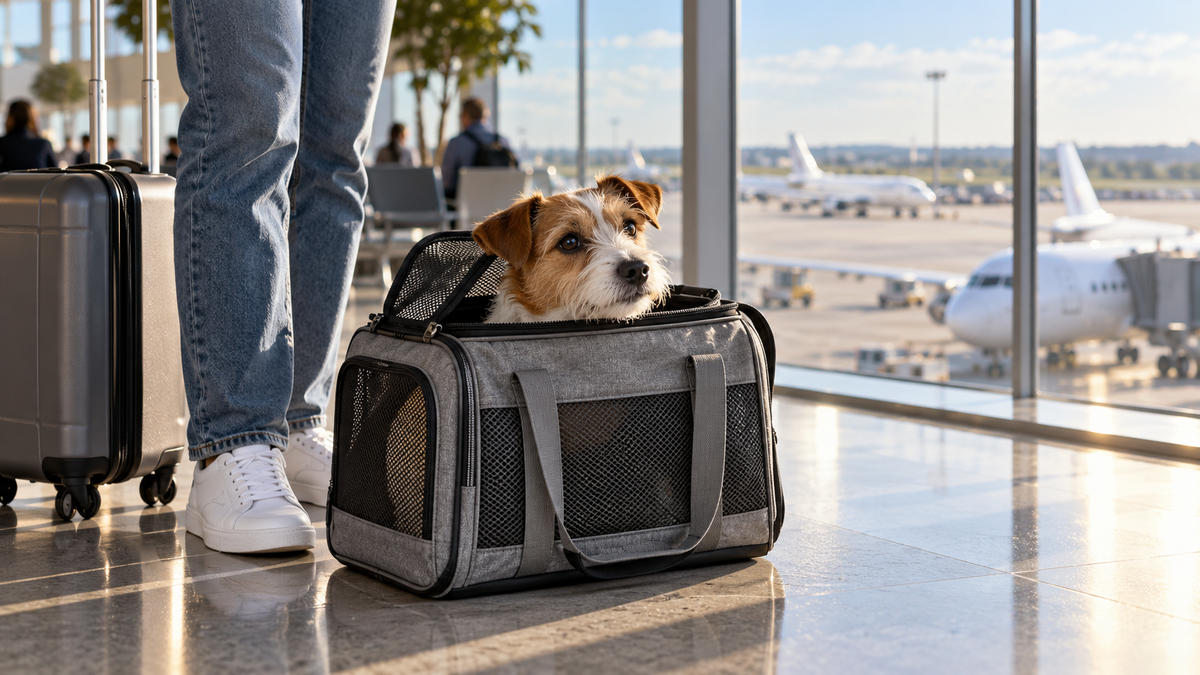
Dogs that weigh no more than 8 kg including the carrier can usually fly in the cabin. The carrier must be soft or hard-sided, well ventilated and small enough to fit under the seat in front of you, typically around 43 × 30 × 27 cm. The dog stays in the carrier for the whole flight, as most airlines will not allow it on your lap. The carrier also counts as hand luggage and the same rules apply to it, so check our article what is not allowed on a plane.
Larger dogs in the hold
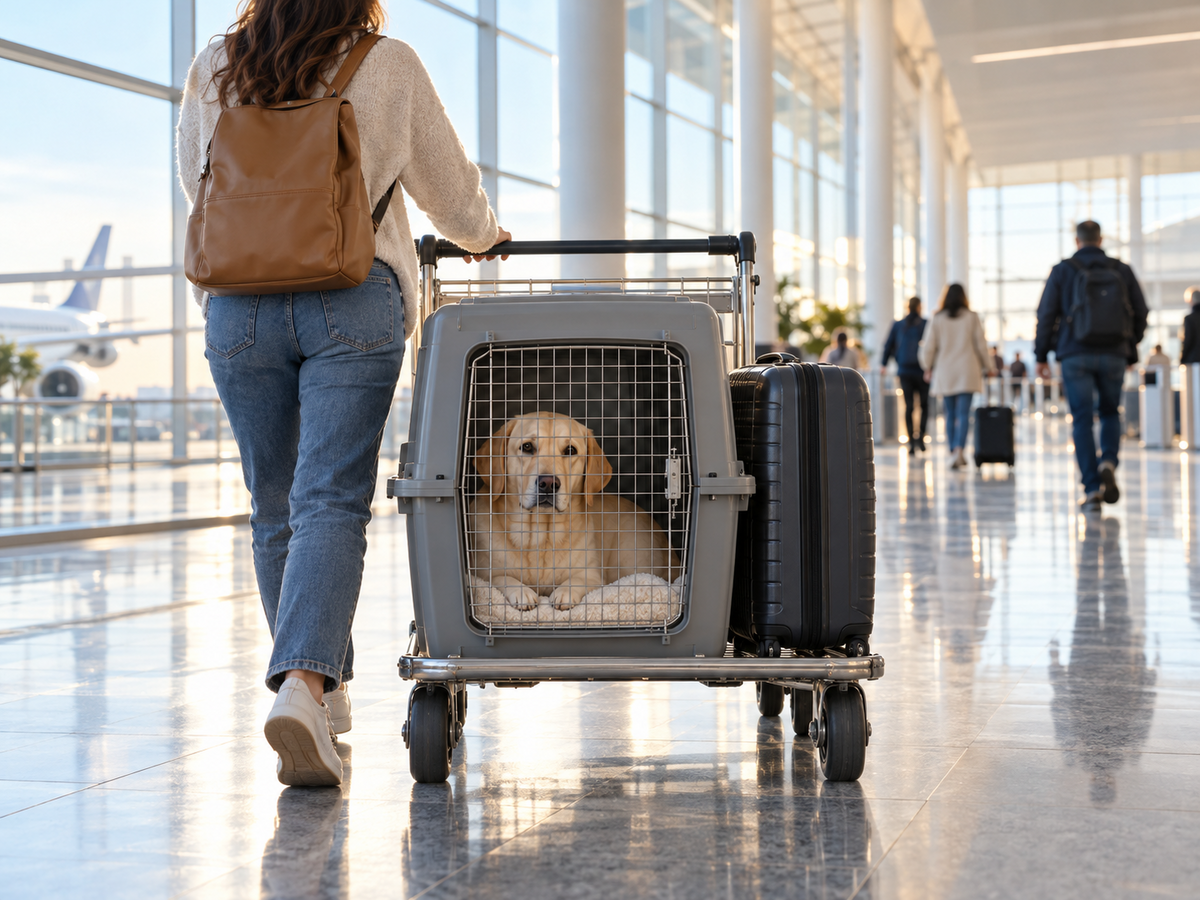
Heavier dogs travel in the air-conditioned cargo hold. They are checked in separately at the counter, in their own rigid carrier. The process is similar to checking a suitcase (see what a checked bag is). For the dog, however, this kind of flight is far more stressful, because it is separated from its owner and surrounded by unfamiliar places and sounds. So if you are only going on a short holiday, it is better to have someone look after your dog at home, if you can.
Many airlines refuse to carry breeds with short muzzles in the hold, such as bulldogs or pugs. Because of the structure of their airways, such a flight poses a health risk to them.
Assistance dogs on a plane: the exception
Assistance, guide and rescue dogs are exempt. They fly with their owner in the cabin free of charge, without a carrier, wearing a harness and on a lead. You must still notify the airline of the transport in advance and provide proof of the dog's training.
Don't want to spend your whole holiday wondering whether the car is safe? In our comparison tool you can book guarded airport parking right away and enjoy your break without worry.
How much does it cost to fly with a dog?
Prices depend on the airline, the dog's weight and the length of the route. The fee is charged for each direction separately, so on a return trip you pay twice.
Indicative prices
Transporting a dog in the cabin usually costs 50 to 120 euros for a one-way flight with European airlines. Hold transport typically costs from around 100 to several hundred euros, depending on the dog's weight and the airline. In 2026, for example, Smartwings charges CZK 3,000 (Czech crowns) each way for a dog up to 8 kg in the cabin and CZK 5,500 each way for a dog up to 32 kg in the cargo hold.
Flying with a dog on low-cost airlines
Low-cost carriers such as Ryanair, Wizz Air or easyJet do not carry animals on regular flights. The only exceptions are assistance and guide dogs. If you want to fly with your dog, choose tickets from traditional airlines that offer animal transport.
Booking a place for your dog
The number of spaces for animals on each flight is usually limited, often to one or two dogs in the cabin. Notify the airline of your dog's transport as soon as you buy your ticket, ideally at the same time. As with baggage, a later booking tends to be more complicated. Our article when to add baggage to your ticket explains this in more detail.
Include airport parking in your travel budget too. A guarded car park with a transfer will take you straight to the terminal. You will appreciate the benefits of airport parking most when you are travelling with a carrier and luggage at the same time.
Flying with a dog starts with preparation at home
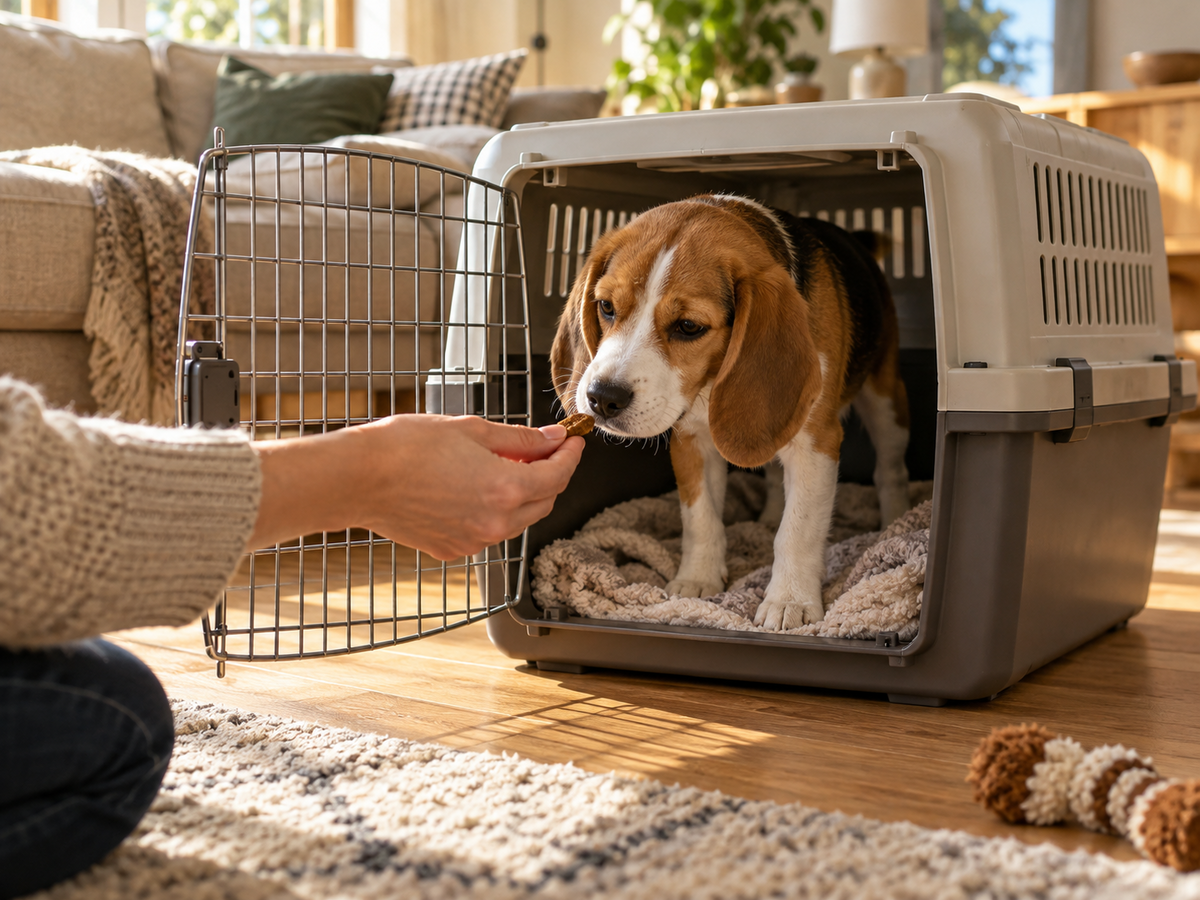
A calm flight with a dog depends on good preparation. A dog that knows its carrier and understands what awaits it copes with the journey far better.
Choosing a carrier
A carrier for the hold should meet IATA requirements. It must be rigid and well ventilated, with metal screws and a door the dog cannot open. The dog must be able to stand comfortably in it, turn around and lie down. Check the cabin carrier dimensions with the specific airline, as they vary by a few centimetres.
Getting used to the carrier
Start getting your dog used to the carrier at home at least several weeks before departure. Leave it open in the living room, put treats inside and gradually increase the time the dog spends in it. Try a car ride with the dog in the carrier as well. If you plan parking at Prague airport with a transfer, check in advance with the operator whether the minibus carries dogs in carriers.
Feeding and walking before the flight
Give your dog its last meal about 4 hours before departure, as dogs cope worse with flying on a full stomach. Offer water regularly in small amounts. Before heading to the airport, walk your dog thoroughly and tire it out, because a tired dog is calmer during the flight.
Don't forget your own food and snacks either. What you may or may not take on board is summarised in our separate article about food on a plane.
Carrier equipment
Put a familiar blanket or a favourite toy that smells of home in the carrier. Line the floor with a waterproof absorbent pad. Attach a water bowl to the door so nothing spills when the carrier moves.
Sedatives are best avoided
Always consult your vet before giving any calming medication. Most vets and airlines do not recommend sedatives for flying, because at altitude they can affect a dog's breathing and circulation. Gentler options are natural pheromones or calming collars, but test these at home in advance as well.
Have your documents and your dog's things sorted? Arrange your parking in advance too. Compare airport parking offers for your dates in our tool, check their pet transport conditions and book right away.
Flying with a dog on departure day, step by step
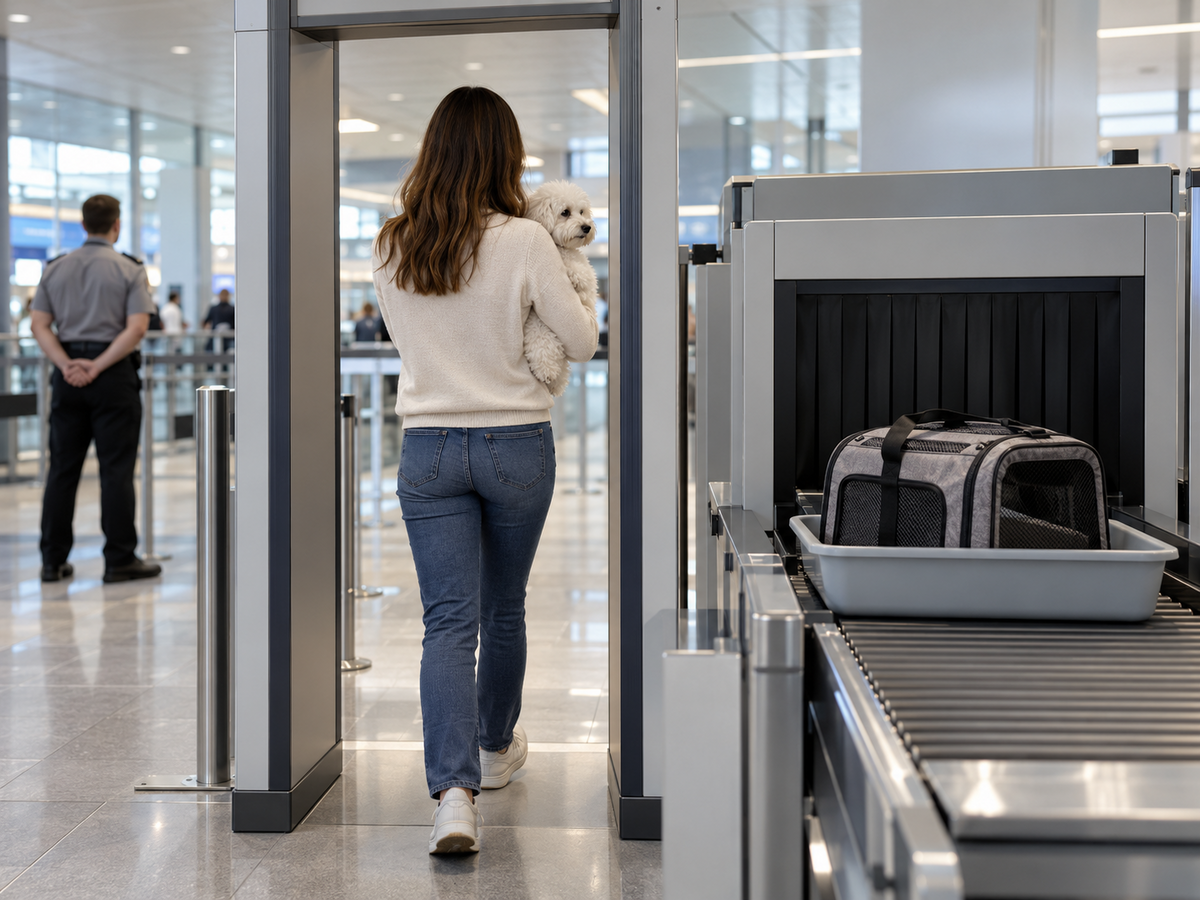
Departure day is usually the hardest for a dog. With a good plan, however, you can get through it without unnecessary stress:
- Arrive at the airport at least three hours in advance. The dog is checked in separately at the counter, where an airline employee checks its documents, carrier and weight. We explain the process in our step-by-step guide to checking in at the airport.
- At the security check, take the dog out of its carrier and walk through the arch holding it in your arms. The empty carrier goes through the X-ray first, and you put the dog back in only afterwards. You can read more about what to expect at security in our article on how the airport security check works.
- During the flight, keep the dog in its carrier under the seat and talk to it in a calm voice. Offer water according to the airline's rules, ideally in a small spill-proof container.
- After landing, collect your dog as soon as possible. If it flew in the hold, it will usually be waiting for you at the oversized baggage collection point.
- Take the dog outside as soon as you can so it can relieve itself and stretch after the long journey.
Keep a lead, waste bags and your dog's passport within reach. When arriving in a country outside the European Union, expect a veterinary check of the documents.
First days at the destination
After arriving, not only you but also your dog needs some time to acclimatise. The change of environment, temperature and routine tires it more than the flight itself. In warm destinations, walk it in the morning and evening and always carry plenty of water. Before the trip, find a vet at your destination and check whether your insurance covers treatment for your dog abroad.
Flying with a dog, stress-free for both of you
To sum up briefly:
- A dog up to 8 kg may fly in the cabin, and larger dogs travel in the hold, always with a microchip, a pet passport and a valid rabies vaccination.
- Notify the airline as soon as you buy your ticket, because space for animals is limited and low-cost airlines do not carry dogs.
- Get your dog used to its carrier at home well in advance, and consult your vet about sedatives.
- Plan everything at least two to three months ahead, and earlier still for trips outside the European Union.
Your vet can help with the paperwork and with preparing your dog for the flight, and then you can set off on holiday together without complications. If you are driving to the airport, we summarise the parking options nearby in our article Prague Airport: car park comparison.
Don't want to ask friends for a lift to or from the airport at five in the morning? With parking that includes a transfer you depend on no one and can leave and return whenever you need to. Reserve your spot at one of them right now!